Red Sea shipping: one email reroutes global oil tankers
Supertankers loaded in Saudi Arabia turned around after a single ban email from Yemen's Houthis. The episode shows that a trade route is not fixed infrastructure but a running risk calculation, one where insurers and shipowners can redraw the flows feeding world economies within hours.
The fact
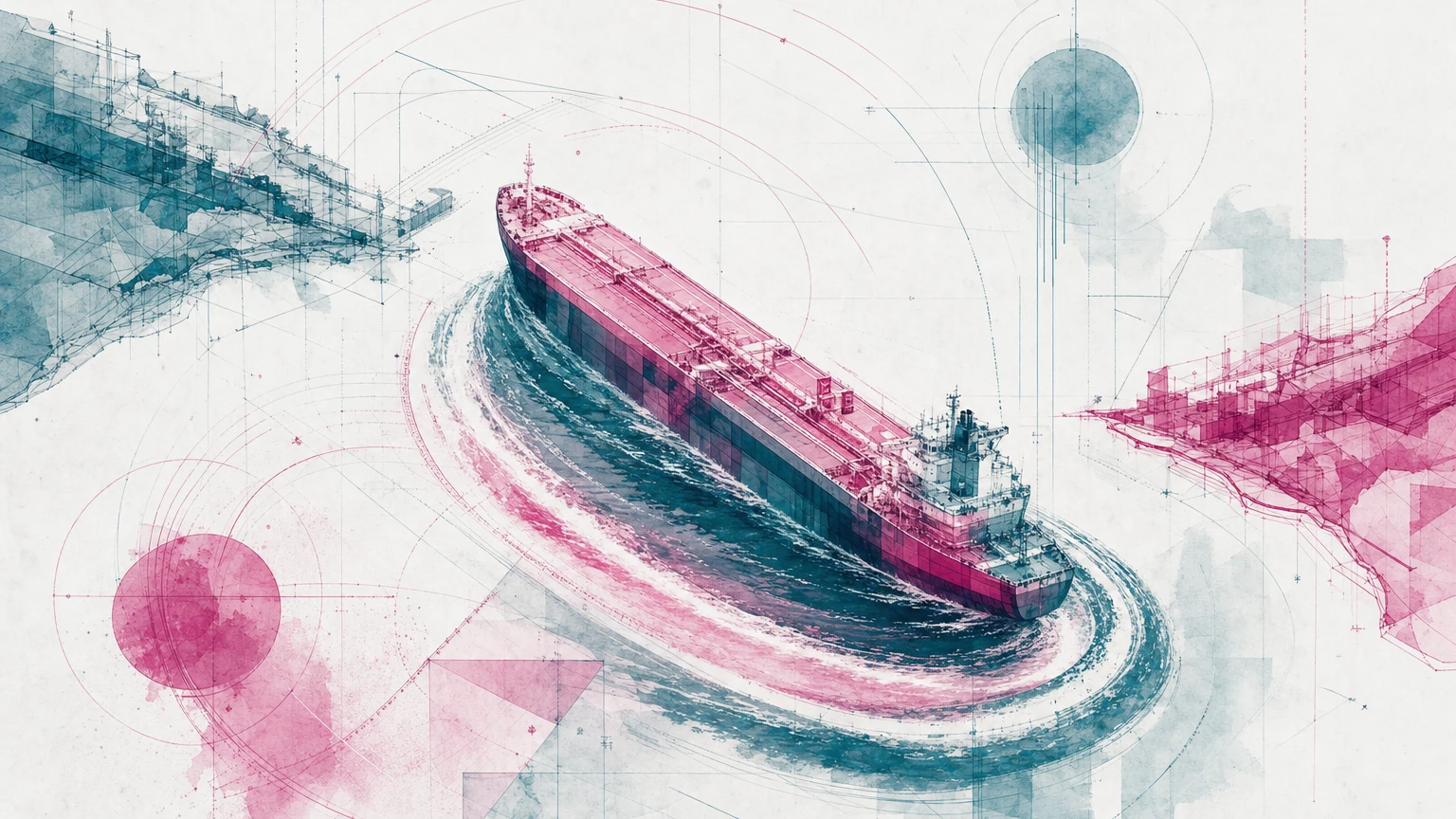
On July 20, Yemen's Houthis sent shipping companies a plain email: vessels were now banned from loading or unloading at Saudi ports. Within days, several crude supertankers reversed course in the Red Sea, heading north toward the Suez Canal rather than risking the Bab el-Mandeb strait.
Among them were tankers loaded at Yanbu and bound for China and India, now forced onto detours of several thousand kilometers.
Why it deserves attention
No missile was fired: a message was enough. That is how strategic chokepoints work, the narrow maritime passages carrying a major share of world trade. A shipping route is not fixed infrastructure. It is a running risk calculation, arbitrated by insurers whose war-risk premiums can make a passage unprofitable within hours.
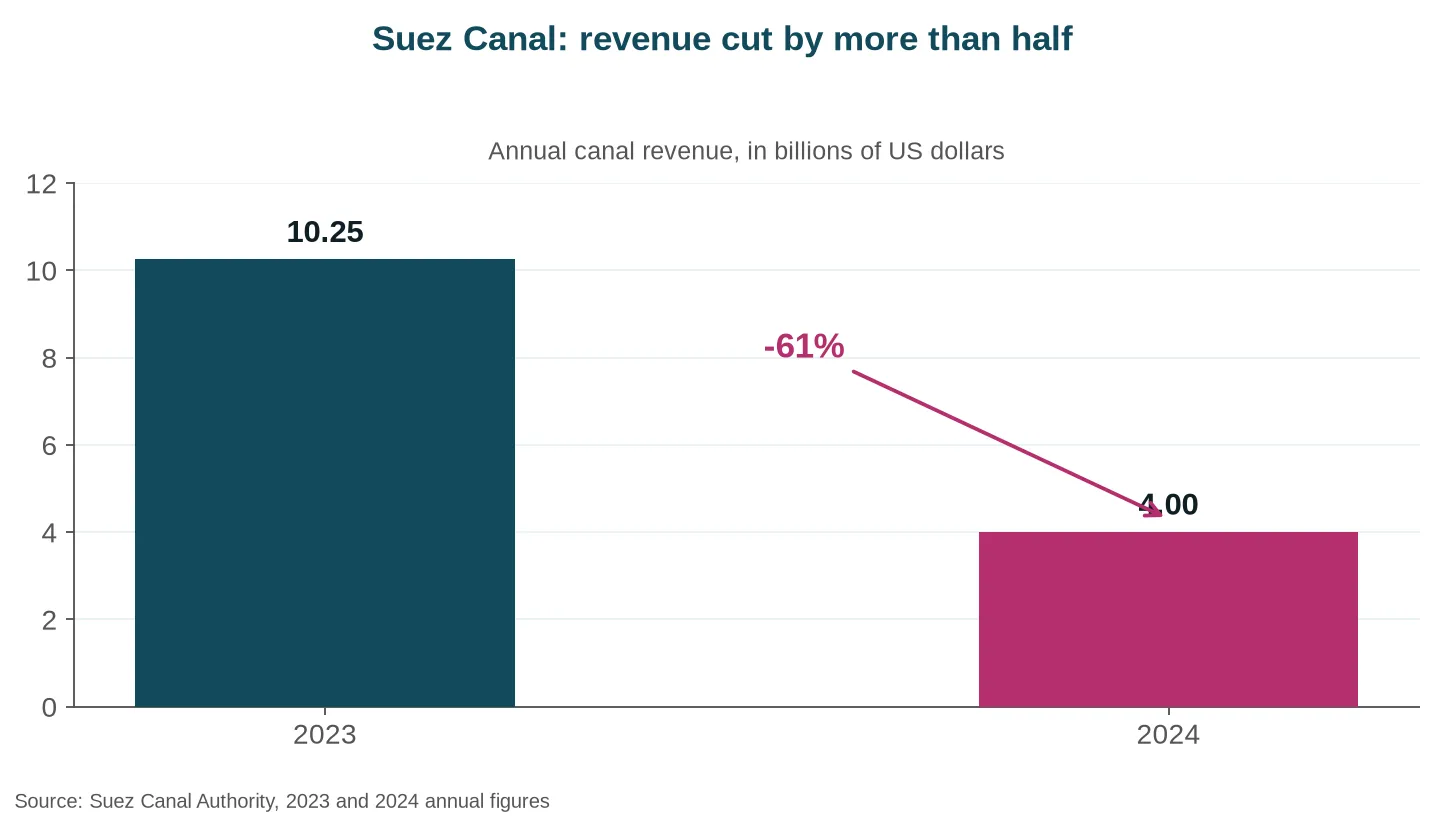
The numbers show the scale. Suez Canal revenue fell from 10.25 billion dollars in 2023 to about 4 billion in 2024, and Cairo puts its cumulative losses at about 10.5 billion dollars since the crisis began. In early 2026, traffic was still running roughly 60 percent below pre-crisis levels. When a strait turns risky, entire value chains reorganize across the globe: fuels, components and consumer goods alike.
To understand why a single local alert can redraw global flows, read the Fundamental: “International trade and global value chains.”
You'll learn how global value chains work, why supply chains form the invisible infrastructure of trade, and how companies arbitrate between maximum efficiency and resilience when shocks hit.
Read the Fundamental →