KNDS IPO: governments buy in before the public can
Europe is rearming at full speed, and KNDS is going public to finance the acceleration. But in this IPO, governments buy in first, and the public gets what’s left.
The fact
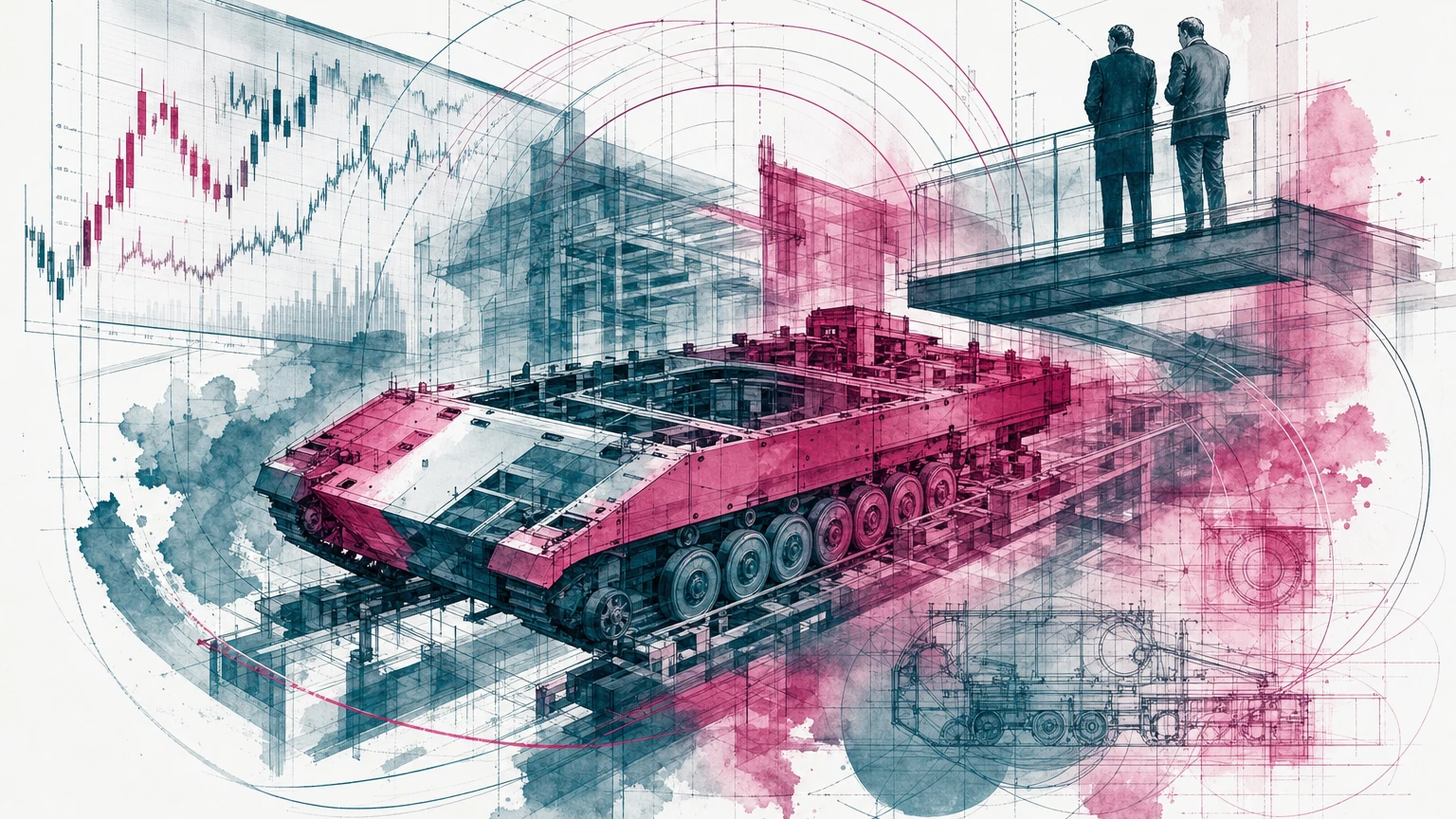
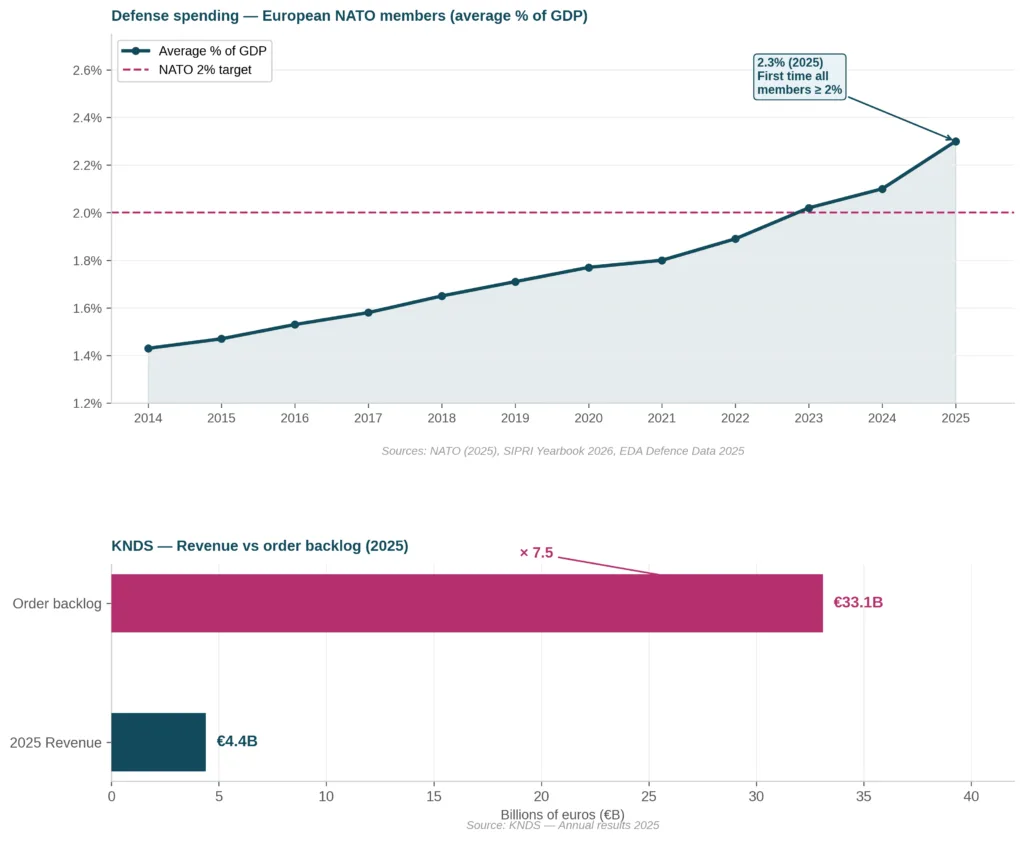
This morning, KNDS officially launched its initial public offering on the Paris and Frankfurt stock exchanges. The Franco-German group, maker of the Leopard 2 tank and the Caesar self-propelled howitzer widely deployed in Ukraine, is targeting a valuation of between €15 and €20 billion according to current estimates. Its order backlog stands at €33 billion, 7.5 times its annual revenue of €4.4 billion.
Why this matters
What is unfolding here is not a conventional IPO. In a standard listing, private shareholders sell stakes to the public to cash out their returns. Here, the dynamic runs in reverse: the Wegmann family is exiting after generations of ownership, but it is the German state stepping in, acquiring a 40% stake. France, for its part, is trimming its holding from 50% to roughly 40% through the market offering. Berlin and Paris are locking in equal governance rights regardless of their exact shareholding percentages. The public accesses just 20% of the float.
The stakes are as much industrial as political. Europe is going through its largest rearmament cycle since the Cold War: NATO’s European members spent more than €381 billion on defense in 2025, and for the first time in the Alliance’s history, every single one of them met the 2% of GDP target. KNDS sits at the center of that demand, with production lead times stretching five to ten years and an order backlog already covering demand well into the 2030s.
What the IPO reveals is a logic few analyses surface: KNDS is not going public because it needs liquidity. It is going public because Berlin and Paris want to lock in industrial governance before opening the capital. Both states are securing equal voting rights, regardless of their future ownership percentages, in a company they consider critical sovereign infrastructure. Here, a stock market listing becomes a political instrument as much as a financing mechanism.
To understand how an initial public offering works, what it means for shareholders, founders, and governments, read the Fundamental: « How Companies Raise Money: From Love Money to IPO. »
Read the Fundamental →