Investment

Battery overcapacity: 2,609 GWh approved in seven months
Beijing has frozen new battery plants after clearing, in seven months, more annual capacity than the country produced in a whole year. Behind the halt sits a plain mechanism: overcapacity is what manufactures falling prices, and correcting it by decree stops that fall early.

Fox-Roku: the 2% antitrust filter that decides big deals
A request for documents blocks nothing. It hits only 2.1% of notified deals, yet what it triggers usually ends in abandonment or restructuring rather than in front of a judge. Merger control works through the calendar far more than through any verdict.

Oura IPO: $61 million profit, $924 million loss on paper
Oura files to list on the Nasdaq with $60.8 million in net income and, one line below, a $924 million loss for common stockholders. In between sits a $1.09 billion buyback of preferred shares from some of its investors, completed before the public could buy in.

Behavioral economics: biases, nudges and their real limits
You never chose how much you save each month: someone chose for you, and you agreed by doing nothing. Behavioral economics measured that gap between intention and action, then turned it into a governing tool adopted in more than fifty countries. Field data later forced a severe correction that almost nobody noticed, and it changes how published findings should be read.

Robot brains: $14 billion of value, $30 million of sales
The teams building universal brains for robots say they are still in their GPT-2 era. Their investors are already paying the price of success: a valuation above $14 billion against roughly $30 million of revenue. What that ratio really tells you about how companies get priced.

Quantum computing: $12.6 billion raised, $1 billion earned
In early July 2026, the White House pledged more than $2 billion to deliver the first industrially useful quantum computer by 2028. In 2025, quantum raised $12.6 billion and billed barely $1 billion. The gap tells the least visible story in technology: diffusion.

Index Ventures raises $2 billion: three funds, three ages
Index Ventures has raised $2 billion. The money did not land in a single pot: it was cut into three, one for each age of a company. That split reveals the mechanism that governs how startups are funded, and, more quietly, what actually refuels the whole system.

Jersey Mike’s IPO: who really pockets the billion raised
Jersey Mike’s raises a billion dollars in its stock market debut. Yet most of that money will fund no stores and no hiring: it pays for the exit of earlier shareholders. Behind this paradox lies an essential distinction, the one separating new shares from existing shares.

HBM memory: why SK Hynix's record profit let markets down
A profit multiplied more than sixfold no longer satisfies markets. SK Hynix’s fall after a record quarter reveals a quiet shift: memory, long a cyclical commodity, has become the most strategic component in global computing, and the bottleneck of the entire artificial intelligence boom.

CXMT’s IPO: why a 470% first-day surge isn’t free money
Chinese memory chipmaker CXMT saw its share price jump nearly 470% on its Shanghai debut, after the largest capital raising in Asia this year. Behind the spectacular number lies a core market mechanism: the price set in an initial public offering is not yet a market price.

Going public: why the stock exchange a firm picks matters
Dangote will list its cement unit, valued at more than 12 billion dollars, in London rather than Dubai. The reason is neither prestige nor taxes, but the speed at which shares can be sold. Behind that choice sits an exchange’s real product: liquidity.

Innovation: R&D, patents and the missing diffusion link
The world has never invented so much: 3.7 million patents filed in 2024, a record. Yet across advanced economies, productivity has been slowing for twenty years. How can this paradox hold? This Fundamental takes apart the three floors of innovation, research, the patent and diffusion, and shows, with figures and examples, why even a brilliant invention only transforms an economy on the day it truly spreads.

Lithium: Zimbabwe secures $300 million to refine at home
Africa's top lithium producer just landed $300 million to process its ore at home instead of shipping it raw. The Chinese-financed deal exposes the real contest behind critical materials: not who owns the deposits, but who controls the processing steps where most of the value is captured.

AI stocks: the market reversal that revives bubble fears
After a 130% rally in a year, the semiconductor index plunges and money flees into other sectors. This is not just a market accident: it is the recurring mechanism by which an over-concentrated investment story always ends up reversing, often violently.

Bidding wars: how two buyers push an acquisition price up
Since May 2026, EQT, LY and Bain have been fighting over Kakaku.com, a Japanese price-comparison site. Each round lifts the per-share offer, from 3,000 to nearly 3,400 yen, pushing the valuation from 3.7 to 4.1 billion dollars. A textbook case of the auction dynamics that drive takeovers.

AI chip boom: TSMC reveals the scale of the capex surge
The company that makes almost every advanced AI chip just posted a 67.9% jump in June sales. Behind that number sits a cycle mechanism few readers can name.

Private equity: buyouts, returns and the great debt bet
Praised for its returns, accused of hollowing out the companies it buys, private equity now manages over 10 trillion dollars. Yet in 2025 it has never had so much idle cash or so many unsold companies. Behind the leveraged buyout and the '2 and 20' formula lies a powerful mechanism that few truly understand.
Private equity: mega-funds are swallowing all the capital
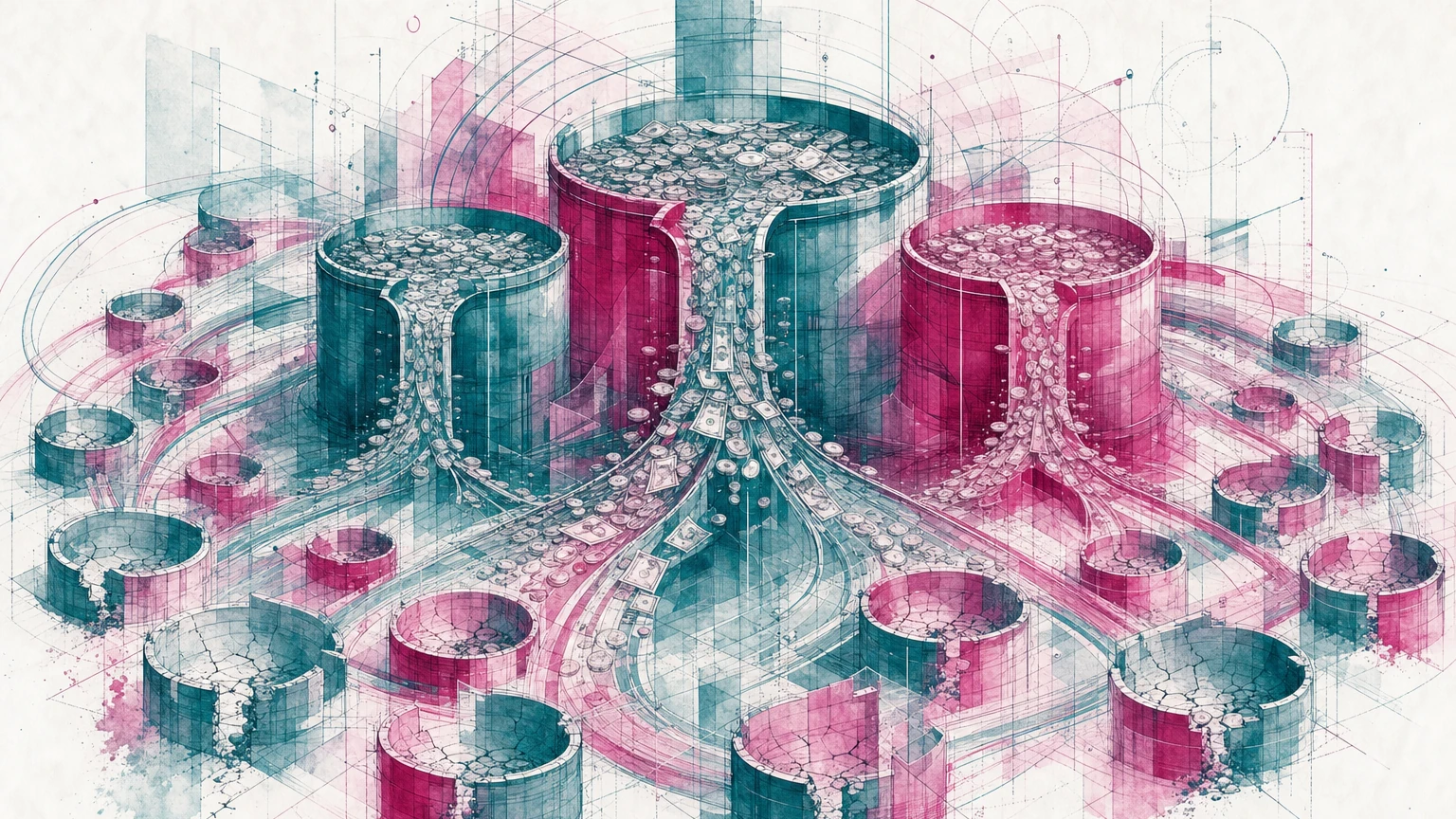
KKR, EQT, Blackstone: ten houses now capture a quarter of all the capital raised in private equity. The cause lies with pension schemes grown too large to back smaller funds. The result: capital flows to the biggest manager rather than the best, and it is buying whole slices of the everyday economy.
IPO explained: Men’s Wearhouse owner returns to market
Tailored Brands, owner of Men’s Wearhouse, files for a US IPO five years after bankruptcy. A chance to understand what an initial public offering really is: a financing and liquidity tool bound by strict obligations, not a finish line.

Profitability and value creation: reading a company
A company can double its revenue and still grow poorer. Reported profit is not the cash in the bank, and EBITDA flatters more than it informs. Behind the words "profit" and "return" hide different measures that decide a firm's real fate. This Fundamental unpacks five indicators, from cash to return on capital, to learn how to read a company for what it is truly worth.

Sydney falls, rents soar: Australia’s market splits
For the first time in the current cycle, home values are falling in Sydney and Melbourne, even as rents rise 5.9% nationally. Rates back at 4.35%, a tax shake-up for landlords, and a record low in consumer confidence: three forces behind a housing market that’s splitting in two.

KNDS IPO: governments buy in before the public can
Europe is rearming at full speed, and KNDS is going public to finance the acceleration. But in this IPO, governments buy in first, and the public gets what’s left.

Alphabet raises $80B: who can still compete in AI
Alphabet just raised $80 billion for AI infrastructure in a single operation. Less a corporate announcement than a structural signal about who still gets to compete at the top of this industry.

SpaceX IPO: $1.8T valuation on $18.7B of revenue
Investment banks are pricing SpaceX at USD 1.8 trillion for a company that lost USD 4.94 billion last year. That is not a miscalculation, it is a method. And that method applies to every valuation you will ever read.

Mergers and acquisitions: how M&A deals work
Every year, thousands of companies merge or get acquired for trillions of dollars combined. Yet studies consistently find that most deals fail to deliver their promised value. This Fundamental breaks down how M&A actually works: why companies pursue deals, what due diligence really uncovers, why synergies are so often overpromised, and what separates the transactions that create lasting value from those that quietly destroy it.

Meta bought Manus. China made it undo the deal
Meta acquired Manus for $2 billion. Four months later, the Chinese government ordered the deal unwound. A global first that shows how mergers and acquisitions, the operations that reshape jobs, products and strategies worldwide, can fail in ways no one anticipated.

Public debt hit $100T. Why it never stops
Global public debt has passed 100 trillion dollars. Some economists call it a slow-motion crisis. Others say it is perfectly manageable. Both can be right, because debt sustainability depends on factors most people never check. How sovereign borrowing really works, and what makes a debt level dangerous or not.

Starship V3 flies: the real stakes of the space race
On May 22, 2026, SpaceX launched Starship V3, the most powerful rocket ever built. Behind the spectacle, three things were at stake at once: a race to land humans on the Moon before 2030, a stock market debut targeted for June 12 at a $1.75 trillion valuation, and the expansion of Starlink, the only division in the company already turning a profit.

The new space economy: how private industry took over
For sixty years, space was a government monopoly. Then a handful of private companies cut the cost of reaching orbit by 95% in a decade. Who are these players, why are they betting billions on low Earth orbit, and what does that mean for everyone else on the ground?
Retirement systems: demographics, funding and reform
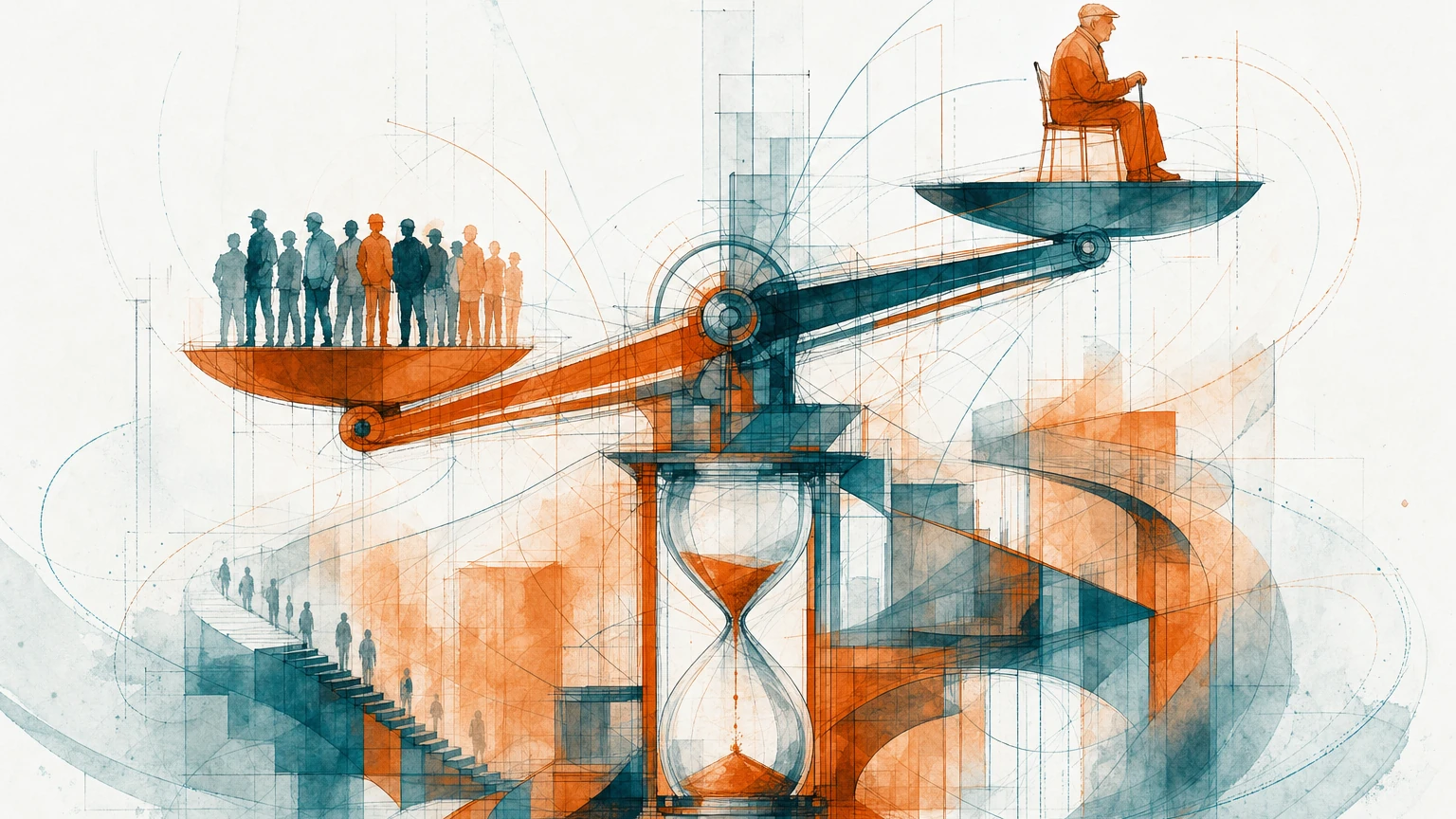
In 1970, every retiree was backed by more than five workers. Today that ratio has collapsed, and most people don’t realize their pension system was never designed to survive this shift. A complete breakdown of how retirement funding works, why it’s under pressure, and what reform actually looks like.

Business valuation: how companies are priced
DCF, market multiples, asset-based valuation, Berkus, VC Method, business valuation isn’t one technique but a family of competing approaches that often produce wildly different numbers for the same company. Here’s how to read them, and when each one actually applies.

How companies raise money: from love money to IPO
Every publicly listed company started with a bank transfer between friends or a maxed-out credit card. Between that moment and ringing the stock exchange bell lies a precise sequence of funding rounds, each with its own logic, its own investors, and its own trade-offs.

Cryptocurrencies and digital assets: the basics
Bitcoin passed $100,000. Entire economies have adopted it as legal tender. Regulators worldwide are still trying to catch up. Before forming an opinion, it helps to understand what blockchain actually does, why crypto behaves the way it does, and what distinguishes a serious asset class from speculation.

Real estate: bubbles, investment and housing policy
Real estate is the world’s largest asset class, and one of the least understood. Price-to-income ratios, cap rates, bubble dynamics, rent control, zoning: the concepts that explain why housing markets behave the way they do, in any country, at any point in the cycle.

Financial markets: how stocks, bonds and prices work
Stocks, bonds, derivatives, indices, market makers, liquidity, financial markets have their own language, their own rules, and their own logic. A structured breakdown of how they’re organized, who the key players are, and what actually moves prices, beyond the headlines.

Economic cycles: recession, expansion and bubbles
Economies don’t grow in straight lines. They expand, overheat, contract, and recover, in patterns that repeat, even if the triggers vary. How to read economic cycles, what the leading indicators actually signal, and why understanding this rhythm changes how you interpret almost any piece of financial news.