Going public: why the stock exchange a firm picks matters
Dangote will list its cement unit, valued at more than 12 billion dollars, in London rather than Dubai. The reason is neither prestige nor taxes, but the speed at which shares can be sold. Behind that choice sits an exchange’s real product: liquidity.

The fact
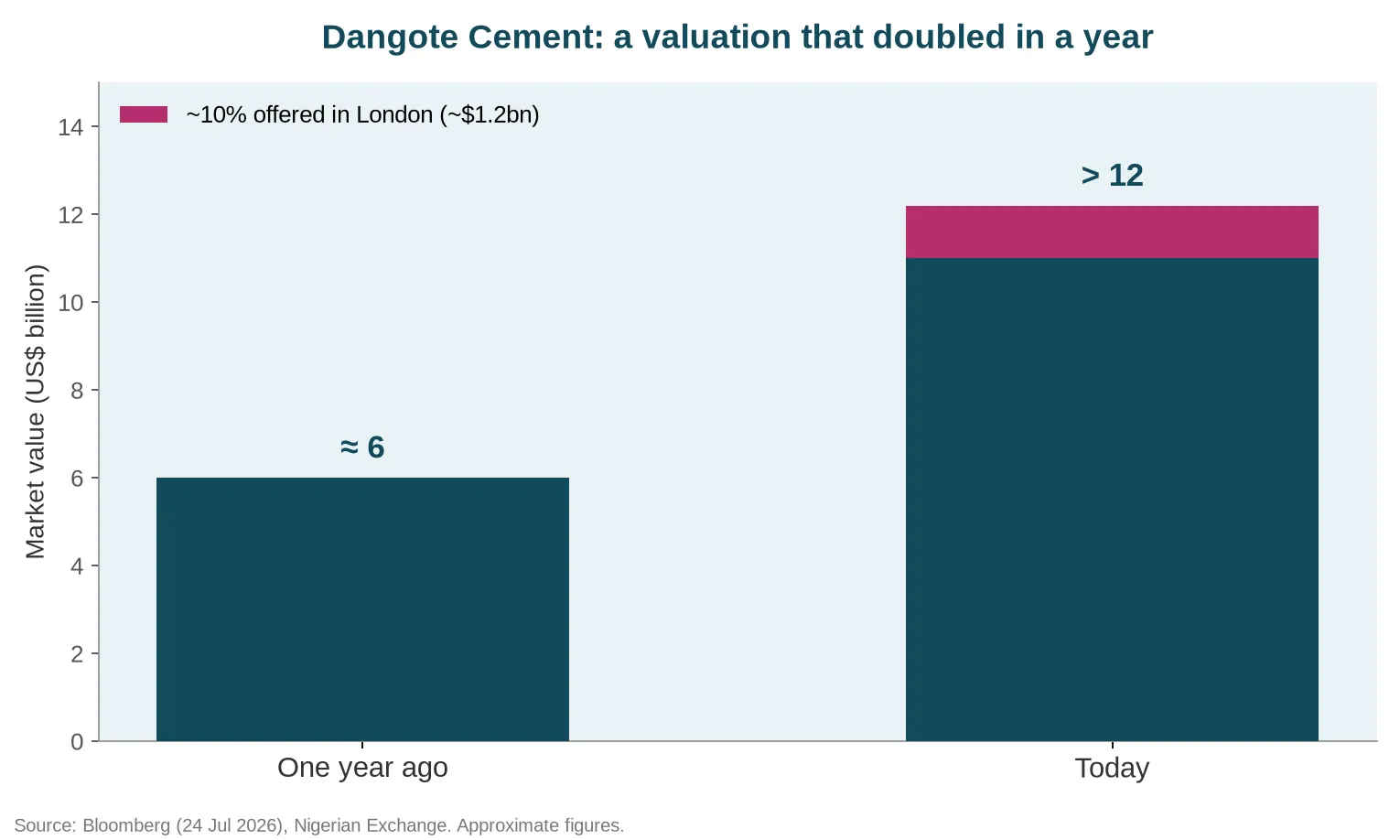
Nigerian billionaire Aliko Dangote’s group has made its call: its cement unit, valued at more than 12 billion dollars, will list in London rather than Dubai. The stated reason is neither prestige nor taxes. In London, selling the shares would simply be faster; in Dubai the operation would have taken years. About 10% of the capital, close to 1.2 billion dollars, will be offered to outside investors through a secondary listing targeted for September 2026.
Why it deserves attention
The real product an exchange sells to a company is not a showcase, it is liquidity. Liquidity is the ability to sell a large block of shares quickly, without collapsing the price, because enough buyers stand ready on the other side. A deep exchange concentrates thousands of funds, insurers and asset managers able to absorb a billion-dollar offer within a few sessions. A thinner marketplace would take months, or years, to place the same quantity of stock.
That is the whole of Dangote’s calculation. A company that has already doubled in value in one year wants to turn part of that paper wealth into usable cash, while the group also prepares separate listings for its refinery and fertiliser arms. The choice of venue then rests on one concrete question: where can you find, from day one, the mass of buyers able to absorb the offer? This logic explains why so many firms born in emerging markets end up listed in London, New York or Hong Kong rather than at home.
To understand the mechanism behind this news, read the Fundamental: “How companies raise money: from love money to IPO.”
You’ll learn why an IPO is first a financing and liquidity tool, how a company travels from love money to public markets, and what founders really give up at each round.
Read the Fundamental →