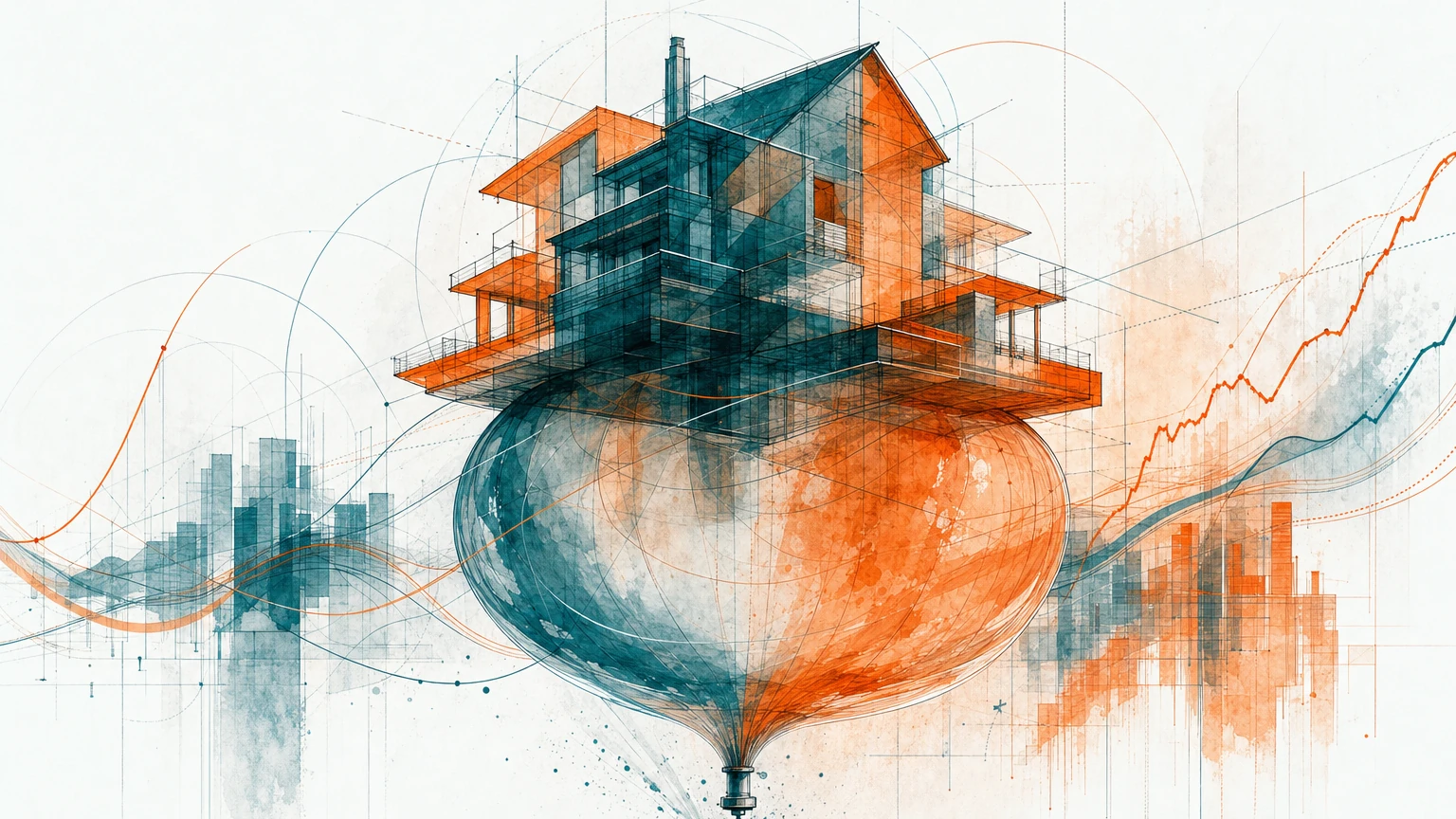
Real estate: bubbles, investment and housing policy
Real estate is the world’s largest asset class, and one of the least understood. Price-to-income ratios, cap rates, bubble dynamics, rent control, zoning: the concepts that explain why housing markets behave the way they do, in any country, at any point in the cycle.
Real estate is the world’s largest asset. It’s also the least understood.
Price drivers, taxation and access to homeownership
Why understanding real estate matters
Real estate is, in most countries, the largest household expense and the primary asset in their wealth portfolio. Globally, the total value of residential property exceeds $250 trillion, more than double the world’s total stock market capitalization. Yet the mechanisms that drive prices, fuel bubbles, and shape access to homeownership remain largely misunderstood by the general public.
When a government announces a housing plan, when a central bank adjusts its rates, or when a headline warns of a “housing bubble,” most readers lack the foundational knowledge needed to truly understand what’s at stake. What factors actually determine the price of a home? Why have prices surged in some countries and stagnated in others? How does taxation influence the market? What distinguishes a healthy price increase from a speculative bubble?
This article gives you the fundamentals to answer these questions. No jargon, no prerequisites: the clear foundations, the essential data, and the concrete mechanisms you need to decode real estate news.
We use audience-measurement (statistics) cookies to understand how the site is used. Cookies strictly necessary for the site to work are always on. Cookie policy
Cookie preferences
Choose which cookie categories you allow. Your choice is stored for six months and can be changed at any time.
NecessaryAlways on
Essential for the site to work: session, security, remembering your cookie choice. Always on.
Anonymous audience measurement (Google Analytics) to understand site usage and improve it.