HBM memory: why SK Hynix's record profit let markets down
A profit multiplied more than sixfold no longer satisfies markets. SK Hynix’s fall after a record quarter reveals a quiet shift: memory, long a cyclical commodity, has become the most strategic component in global computing, and the bottleneck of the entire artificial intelligence boom.
The fact
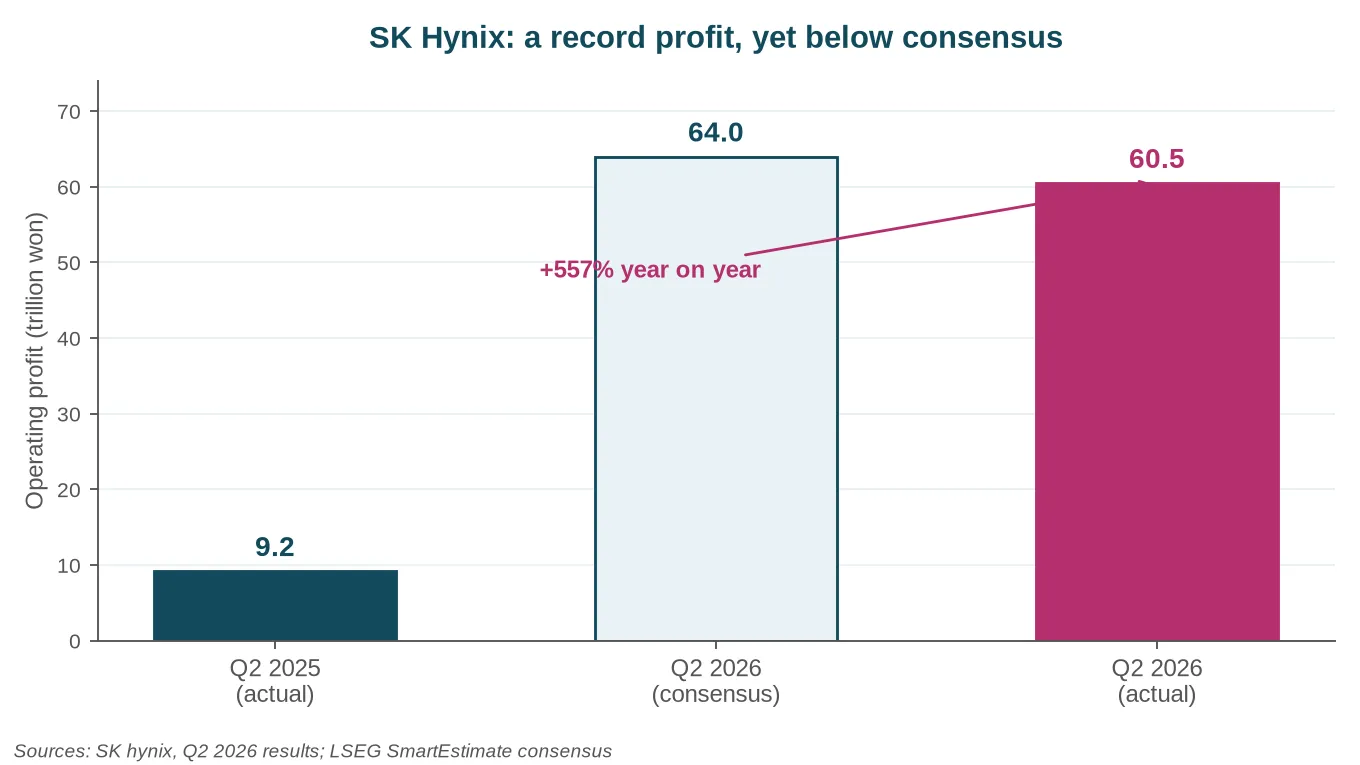
On July 29, South Korea’s SK Hynix, the world’s leading supplier of memory for artificial intelligence, reported the best quarter in its history: 60.5 trillion won in operating profit (about 41 billion dollars), up 557% year on year. The verdict was immediate all the same: the stock fell nearly 9%, dragging technology shares down from Seoul to New York.
Why it deserves attention
The market expected about 64 trillion won, according to the LSEG consensus. Multiplying profit more than sixfold is no longer enough: investors are already pricing in perfection. The paradox reveals memory’s new place in the AI economy. Every AI accelerator depends on high-bandwidth memory (HBM), chips that stack layers of silicon to feed processors with data. Long treated as a cyclical commodity, memory has become the strategic bottleneck of global computing.
SK Hynix concentrates most of the world’s HBM output and has just signed multi-year contracts with about ten key customers. To keep pace, the company will lift its capital spending to at least 45 trillion won (31 billion dollars), an increase of around 50%. From the United States to China through Taiwan, the entire AI chain now depends on a handful of factories able to produce these memory stacks.
To understand why a handful of chip factories now decide the balance of power between great nations, read the Fundamental: “Semiconductors: technology and geopolitics.”
You’ll learn to tell apart the three chip families (logic, memory, analog), the difference between advanced and mature chips, and how a global chain riddled with technical monopolies shapes the rivalry between great powers.
Read the Fundamental →