Solar-plus-storage: why batteries now follow every panel
Solar is now the cheapest electricity on Earth, yet it only generates in daylight. The wave of giant batteries paired with every new solar farm tells a quiet story: the challenge is no longer producing energy, but shifting it through time.
The fact
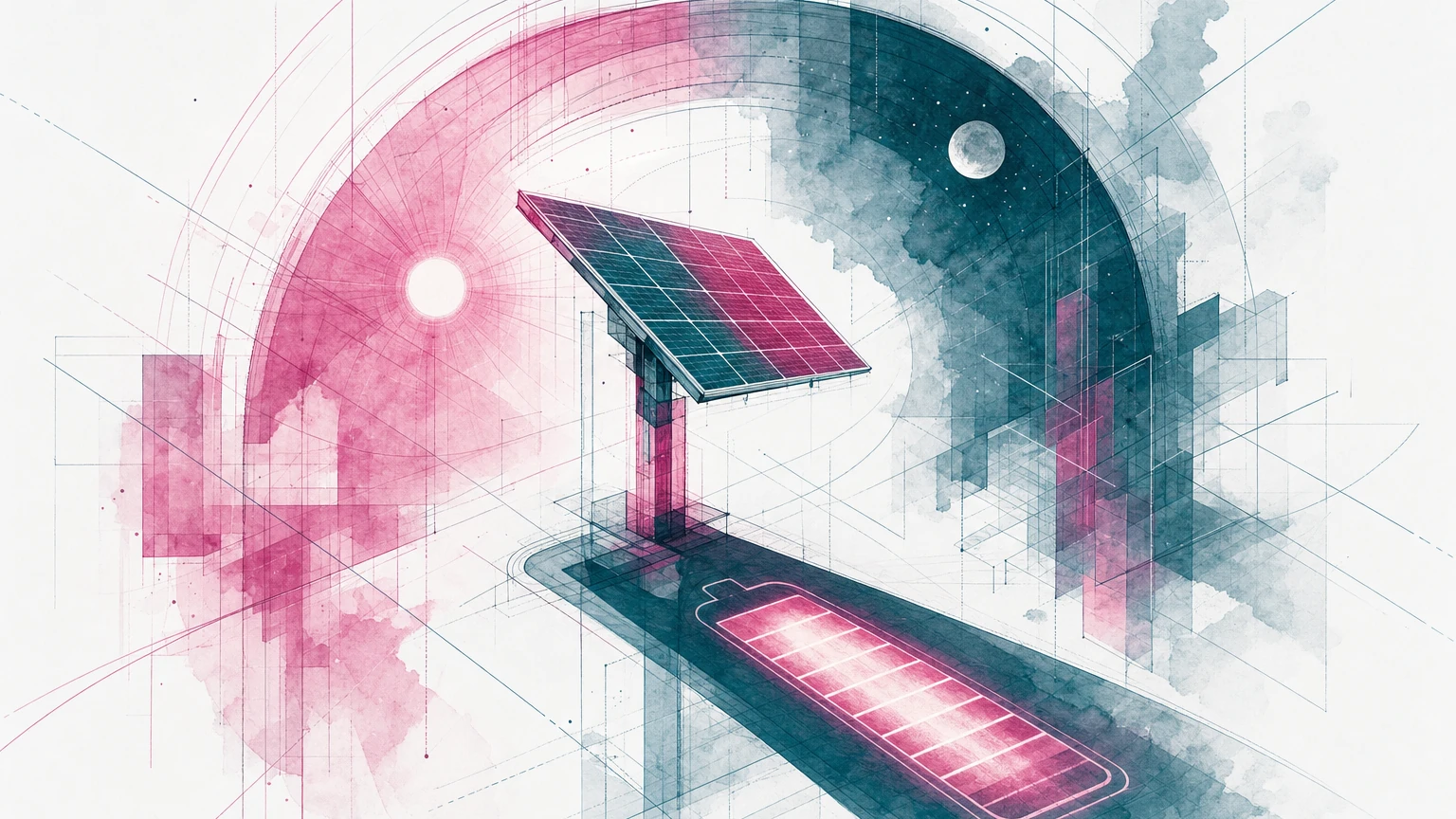
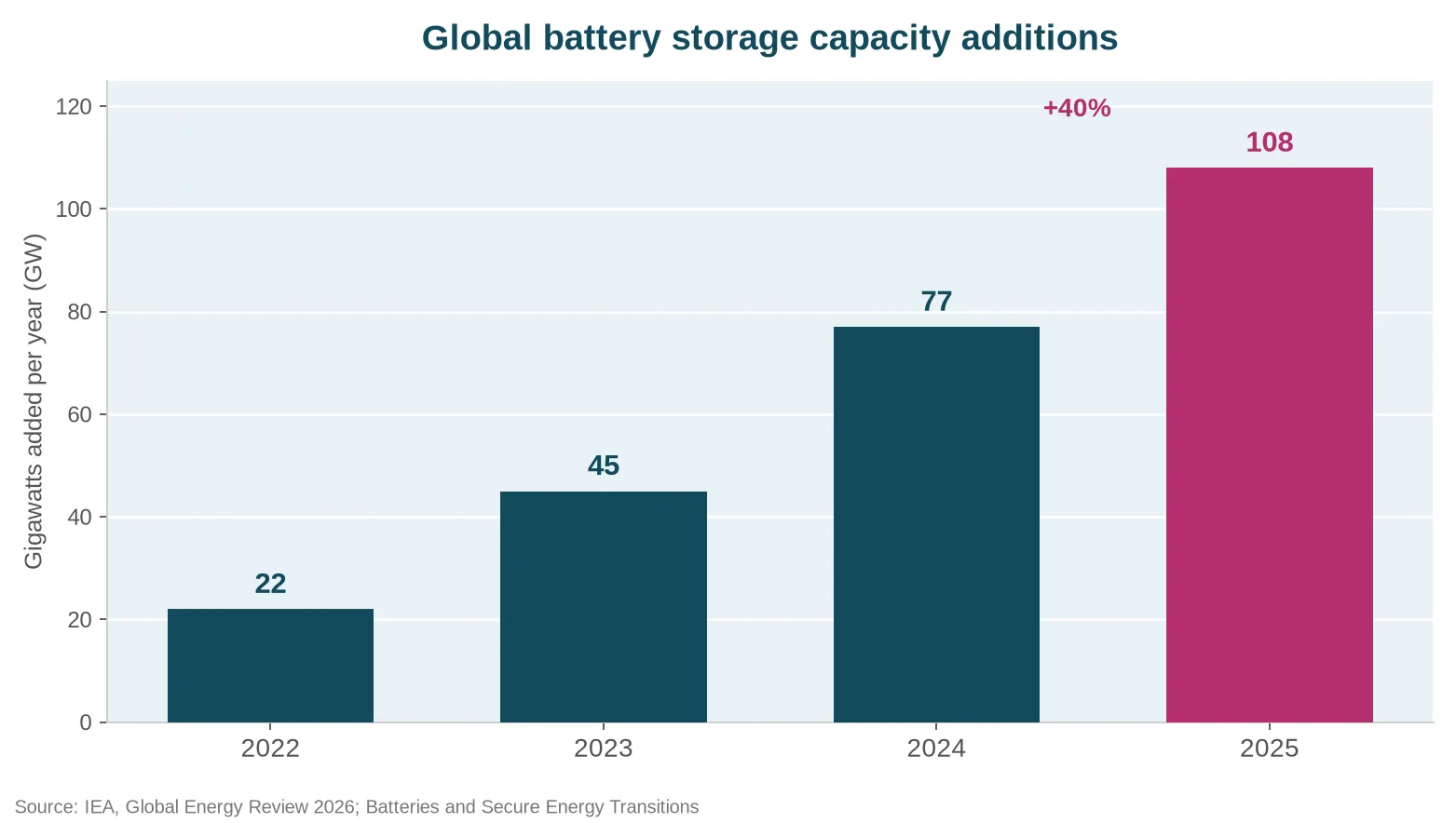
An independent power producer has just signed a 20-year power purchase agreement pairing a 200-megawatt solar plant with a 200 MW, 800-megawatt-hour battery. The pairing is no outlier: according to the International Energy Agency, roughly 108 gigawatts of battery storage were added worldwide in 2025, 40% more than in 2024. China alone accounts for about 60%.
Why it matters
Solar has become the cheapest source of electricity in history, yet it carries a structural flaw: it only generates in daylight, while demand peaks after sunset. The battery fixes that timing gap. With 800 megawatt-hours behind 200 megawatts, the plant can deliver full output for four hours, long enough to cover the evening peak. Intermittent solar thus turns into near-dispatchable power. The shift rests on a second curve: lithium-ion battery prices fell from $732 to $115 per kilowatt-hour between 2013 and 2024. Below that line, bolting a battery onto every panel stops being a luxury and becomes the economic default, from California to Australia to the Gulf. The real bottleneck is no longer generating electricity, but moving it through time.
To understand the mechanism behind this news, read the Fundamental: "The energy transition: technologies, stakes, timelines."
You'll learn why storage is the transition's missing link: the battery learning curve, the $100-per-kilowatt-hour parity threshold, and the options for long-duration storage beyond a few hours.
Read the Fundamental →