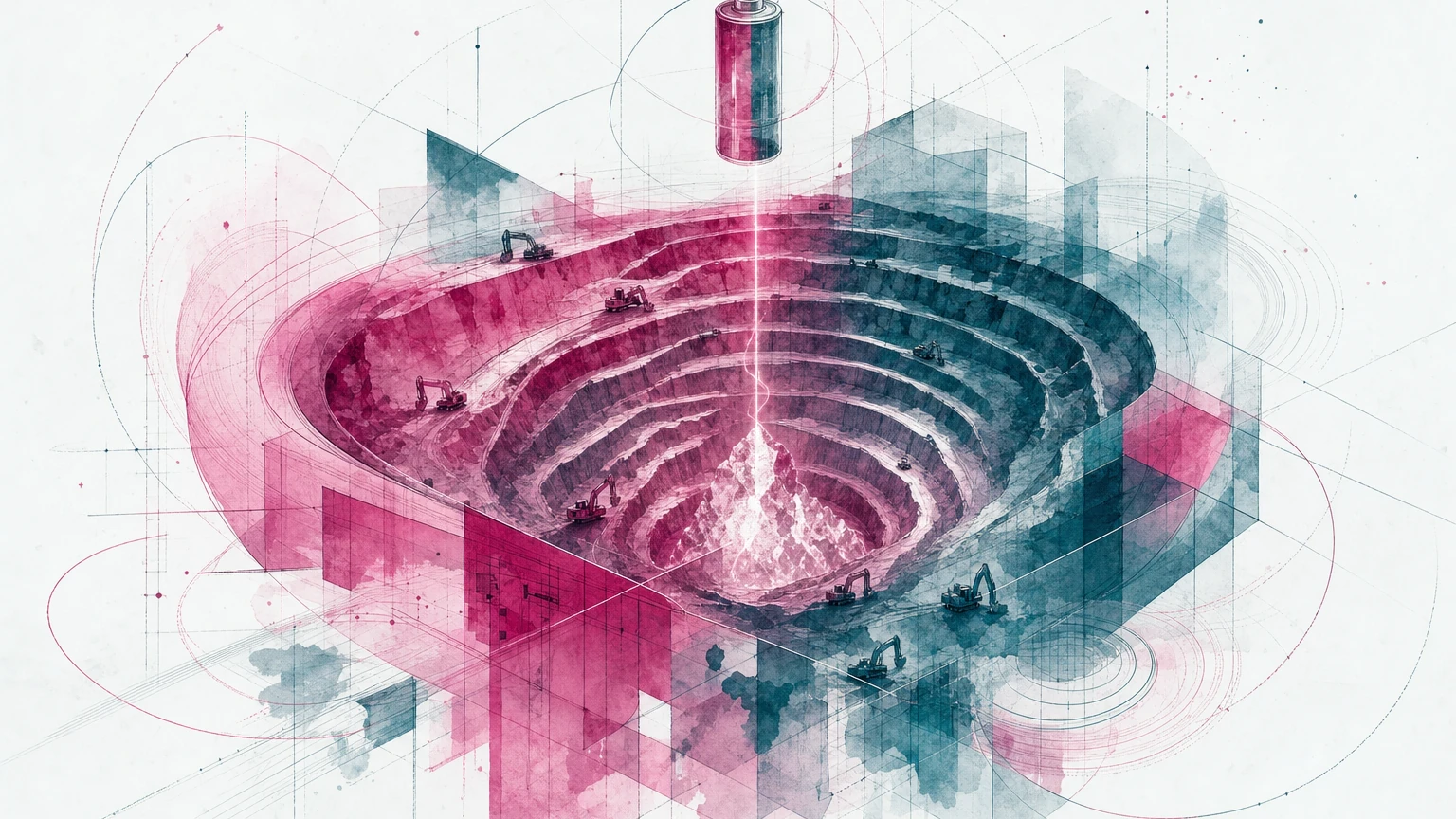
Fusion’s real limit: 20,000 km of tape per demo reactor
Proxima Fusion is backing a €140 million superconducting tape factory. Its demonstration reactor needs 20,000 kilometres of the stuff, while world capacity barely tops 5,000 a year across every application. Fusion’s bottleneck is no longer plasma physics: it is industrial capacity.
The fact
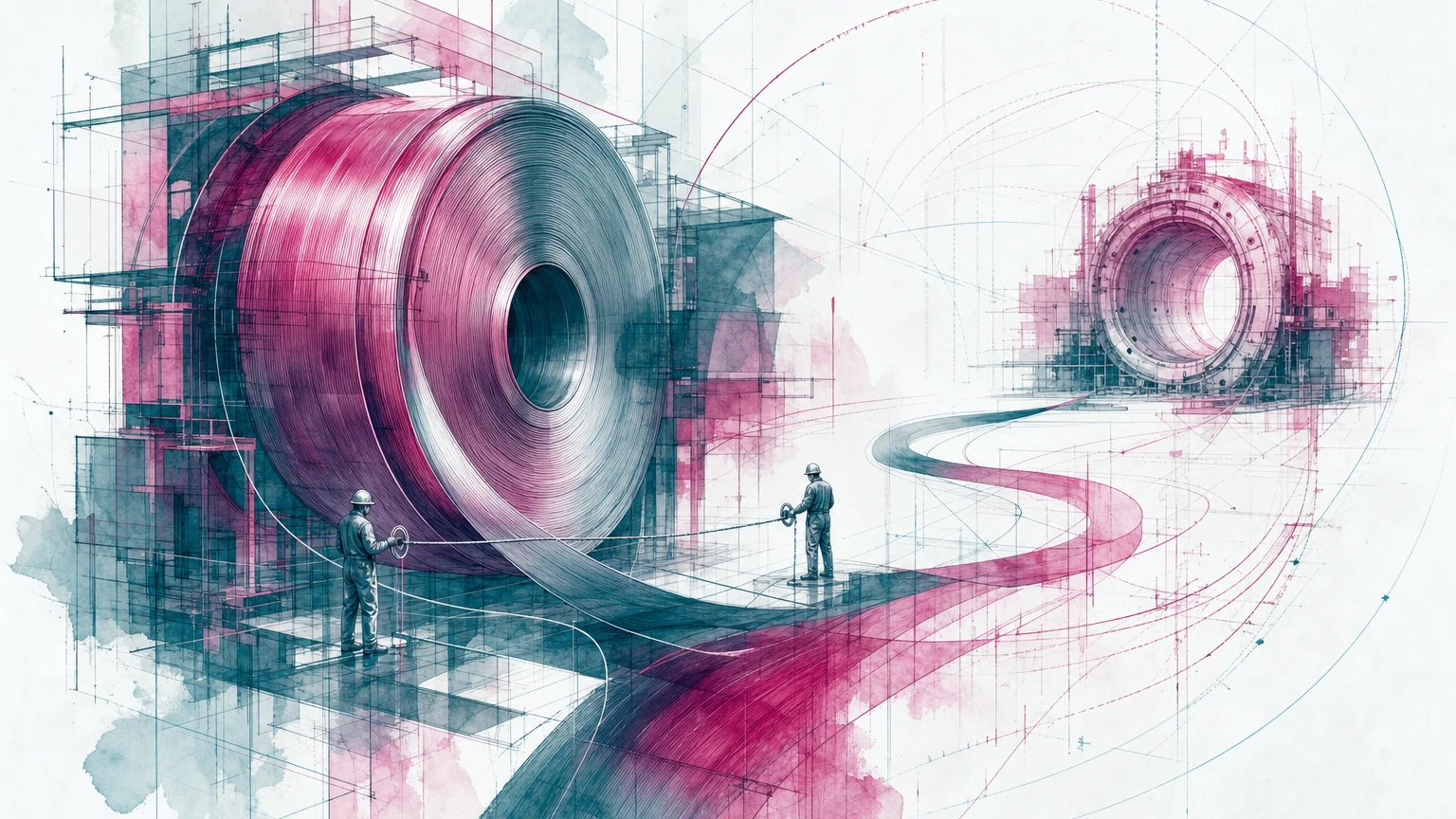
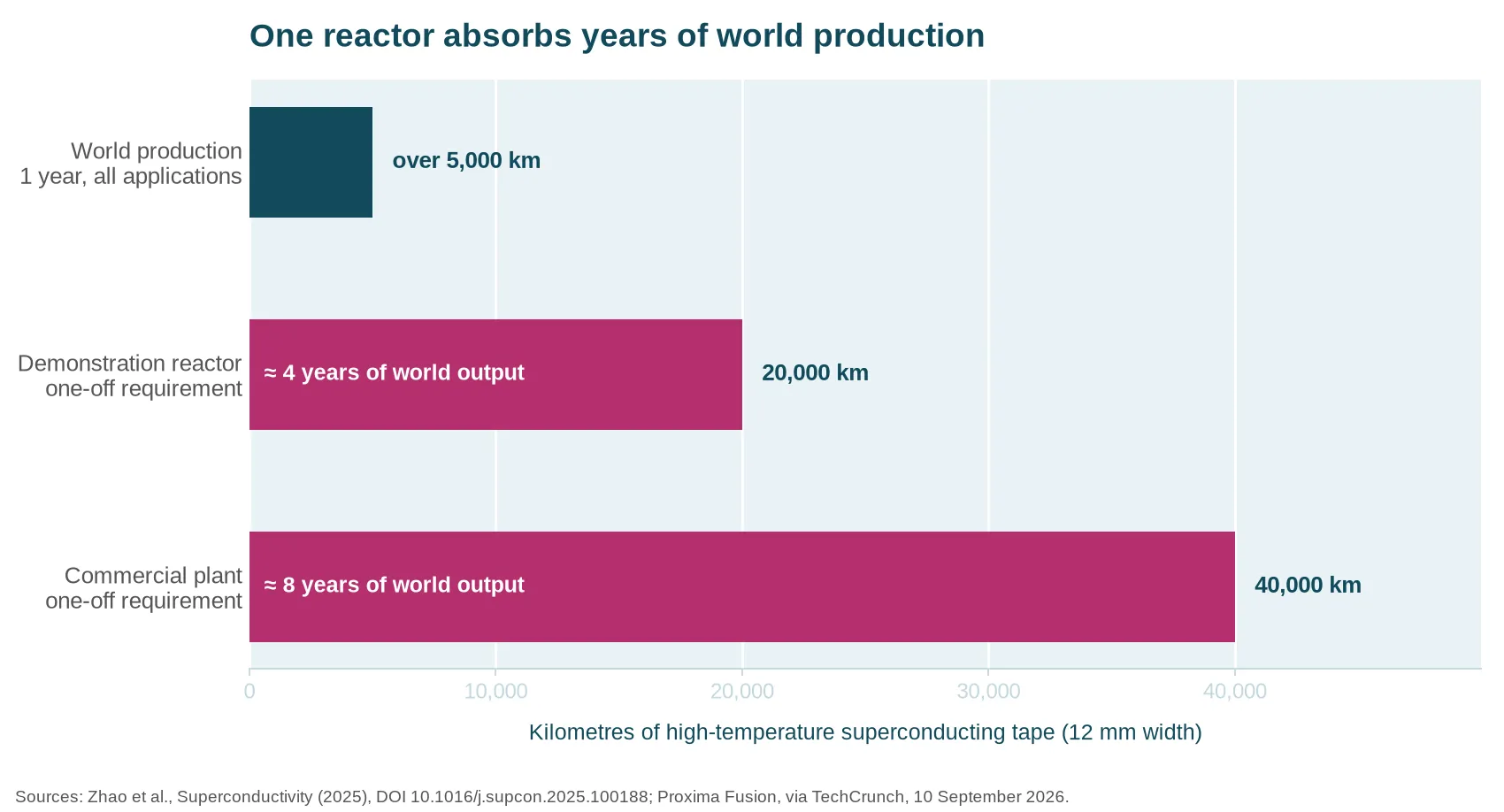
On 10 September, German start-up Proxima Fusion announced a memorandum of understanding for a €140 million factory, €21 million of it put up by the state of Lower Saxony. No reactor will be built there. The plant will make tape: a superconducting ribbon twelve millimetres wide, wound into the magnets that hold the plasma. Its demonstration reactor will swallow 20,000 kilometres of it. A commercial plant, twice that.
Why it matters
Set that figure against world supply. A review in the journal Superconductivity counts roughly fifteen manufacturers on the planet, with combined annual capacity above 5,000 kilometres of 12 mm tape, across every application. One demonstration reactor would therefore take close to four years of everything the world can make. Four manufacturers supply more than half the volume: three sit in Japan and China, the fourth in Russia.
The bottleneck has changed nature. For seventy years, fusion was stuck on plasma physics. High-temperature superconducting magnets eased that deadlock by making compact machines credible; they replaced it with a factory problem. How many reactors can be built this decade no longer follows from an equation. It follows from an order book.
The stake runs wider than fusion. The same tape is wanted by power grids, medical imaging and electric motors: at $15 to $30 a metre, every kilometre a reactor takes is a kilometre those uses lose. The consequence is immediate for anyone tracking the sector: any start-up date announced for before 2035 is now judged on a supply question, not on a laboratory result.
To understand what separates a laboratory demonstration from a plant that delivers kilowatt-hours, read the Fundamental: “Nuclear fusion: state of the art and commercial horizon.”
You’ll learn why the net gain achieved in 2022 says nothing about real electrical output, which three locks remain open (neutron bombardment, tritium supply, electrical Q), and which timelines separate the optimistic scenario from the likely one.
Read the Fundamental →