Fed rate hike: markets triple the odds as oil tops $100
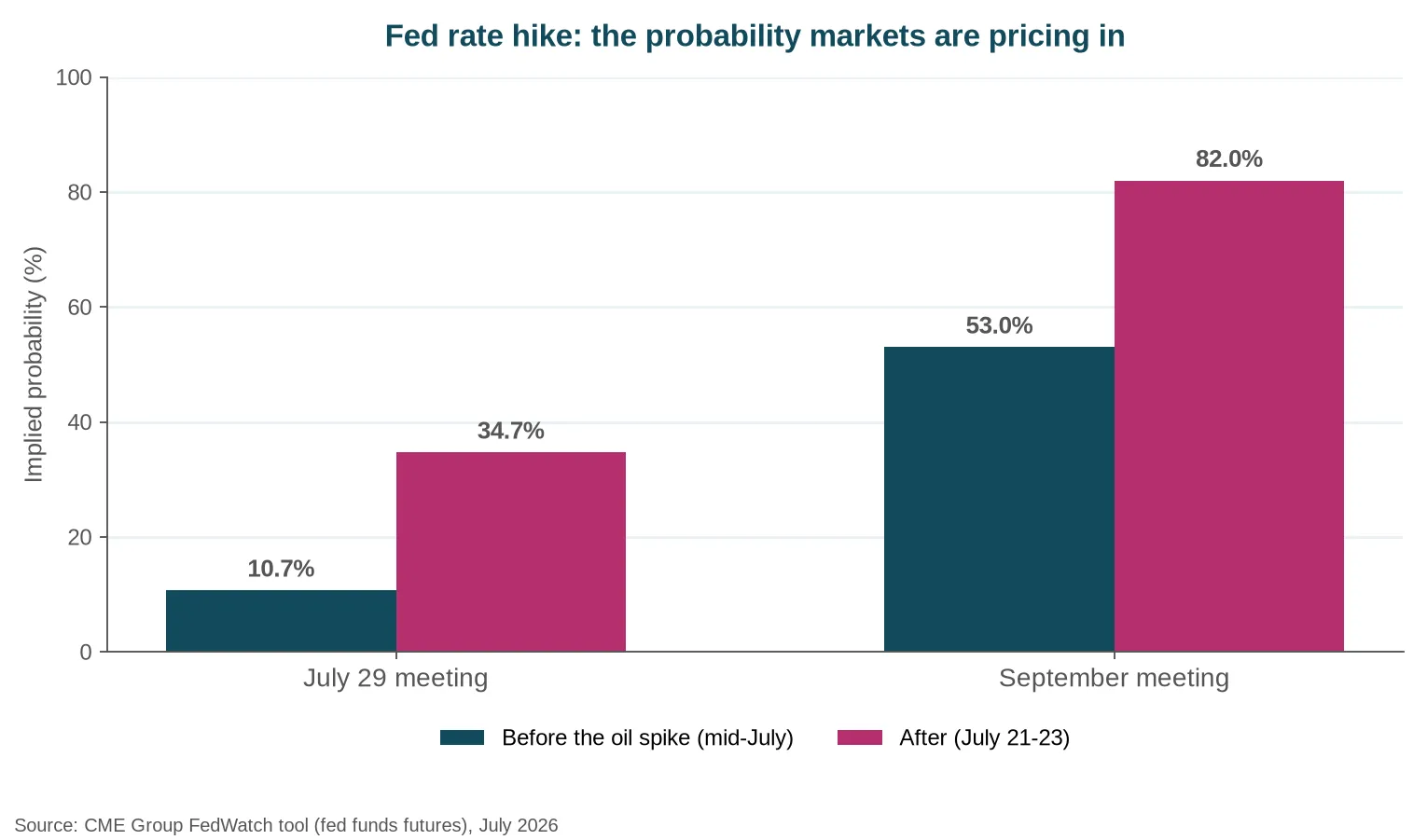
In one week, the market-implied probability of a Federal Reserve rate hike on July 29 jumped from 10.7% to 34.7%. Behind the reversal lies a precise chain: oil above $100 a barrel feeds inflation, and inflation commands monetary policy.

The fact
On July 15, futures markets put the odds of a Federal Reserve rate hike at the July 29 meeting at just 10.7%. One week later, that probability had more than tripled to 34.7%, according to CME Group’s FedWatch tool. The trigger: investors have been piling into rate-rise bets since oil settled above $100 a barrel.
Why it deserves attention
The reversal lays bare the most closely watched transmission chain in the global economy. Persistently expensive crude first raises energy bills, then transport, then the cost of producing almost everything. The price index the Fed targets is up 3.7% over a year, nearly double its 2% goal. Markets now expect the classic response: lifting the policy rate, currently between 3.50% and 3.75%, to make credit dearer and cool demand.
Timing matters as much as direction. For the September meeting, futures now price roughly an 82% chance of a hike, up from 53% a week earlier. US Treasury yields have hit their highest levels of 2026. That repricing is already spreading far beyond trading floors: mortgage rates, corporate borrowing costs, emerging-market currencies. A pricier barrel in the Gulf ends up changing a monthly payment in Toronto, Nairobi or Seoul.
To understand how a central bank turns an oil shock into a rate decision, read the Fundamental: “Interest rates: how monetary policy moves the economy.”
You’ll learn what a policy rate actually is and who sets it, how the transmission mechanism links that decision to your loans and savings, and why the relationship between inflation and rates sets the tempo for central banks.
Read the Fundamental →