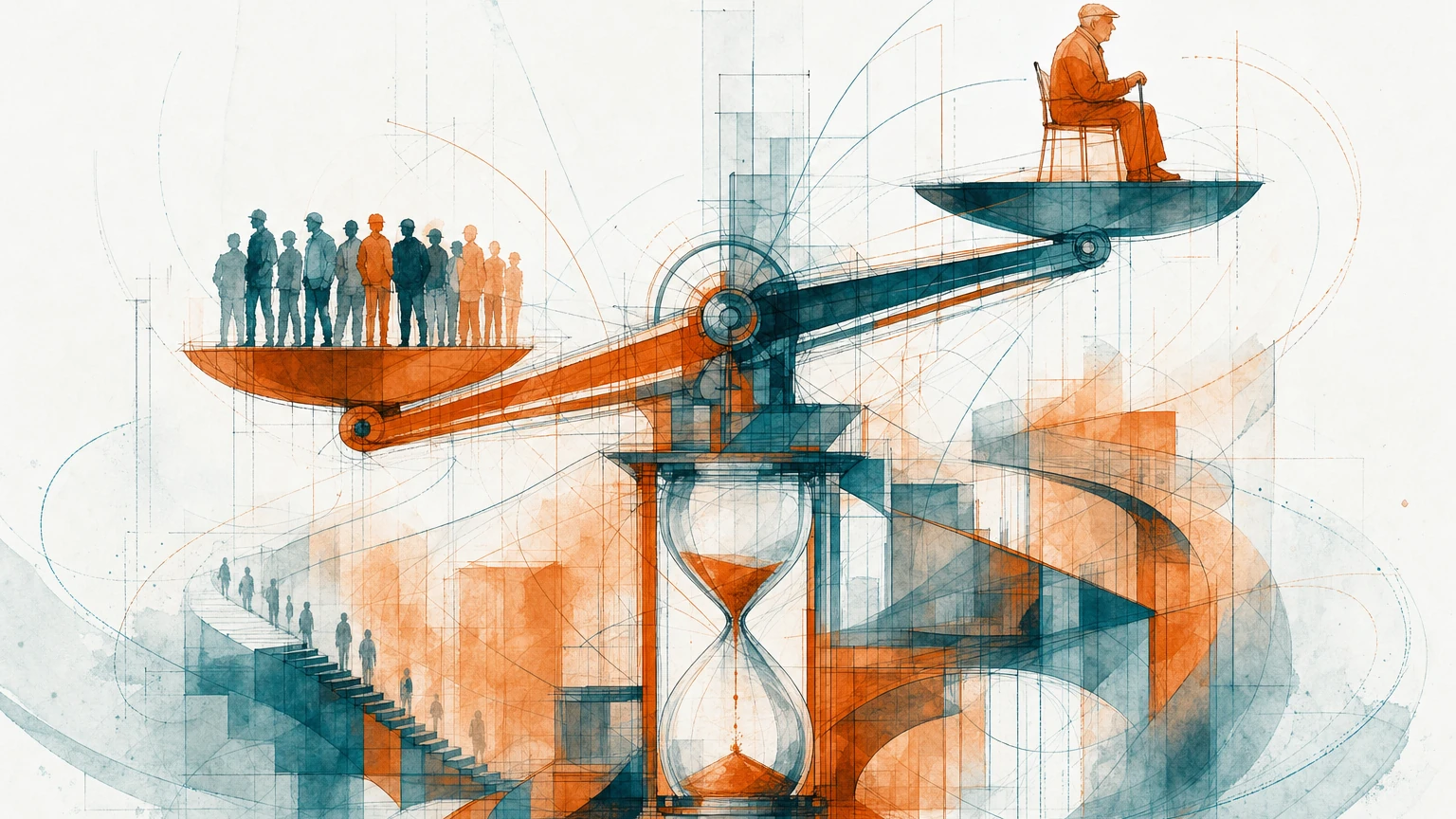
You have never had access to so much information, and never trusted it so little. Behind that paradox lies an economic shift: advertising has left newsrooms for three platforms, and falsehood travels six times faster than truth. Understanding this link changes the way you read the news.
You have never read so much news. You have never trusted it so little.
Title tag (AIOSEO): Media and information: the real cost of credibility
Introduction: the abundance that feeds distrust
Humanity has never produced so much information. A smartphone opens more articles in one minute than an entire library held thirty years ago. Yet trust in the news is falling almost everywhere. According to the Reuters Institute Digital News Report 2025, which surveys nearly 100,000 people across 48 countries, only 40% of respondents say they trust the news in general.
That figure has stalled for three years, at a historically low level. Here lies the central paradox: the more information multiplies, the less the public believes it. Understanding the media therefore means connecting two dimensions that are too often kept apart. The first is economic, how a newsroom makes money. The second is cognitive, why a piece of information feels reliable or suspect.
These two dimensions are linked. A media outlet's business model shapes what it produces, how it distributes it, and to whom it answers. When that model wobbles, the quality of information wobbles with it. This Fundamental explains that link, with figures, so you can read the news with fresh eyes.
One idea captures the stakes: the attention economy. In a world flooded with content, the scarce resource is no longer information but the time you agree to give it. Every player, newspaper or platform, fights to capture that time. Understanding the media means understanding who profits from that fight, and at what cost to quality.
We use audience-measurement (statistics) cookies to understand how the site is used. Cookies strictly necessary for the site to work are always on. Cookie policy
Cookie preferences
Choose which cookie categories you allow. Your choice is stored for six months and can be changed at any time.
NecessaryAlways on
Essential for the site to work: session, security, remembering your cookie choice. Always on.
Anonymous audience measurement (Google Analytics) to understand site usage and improve it.