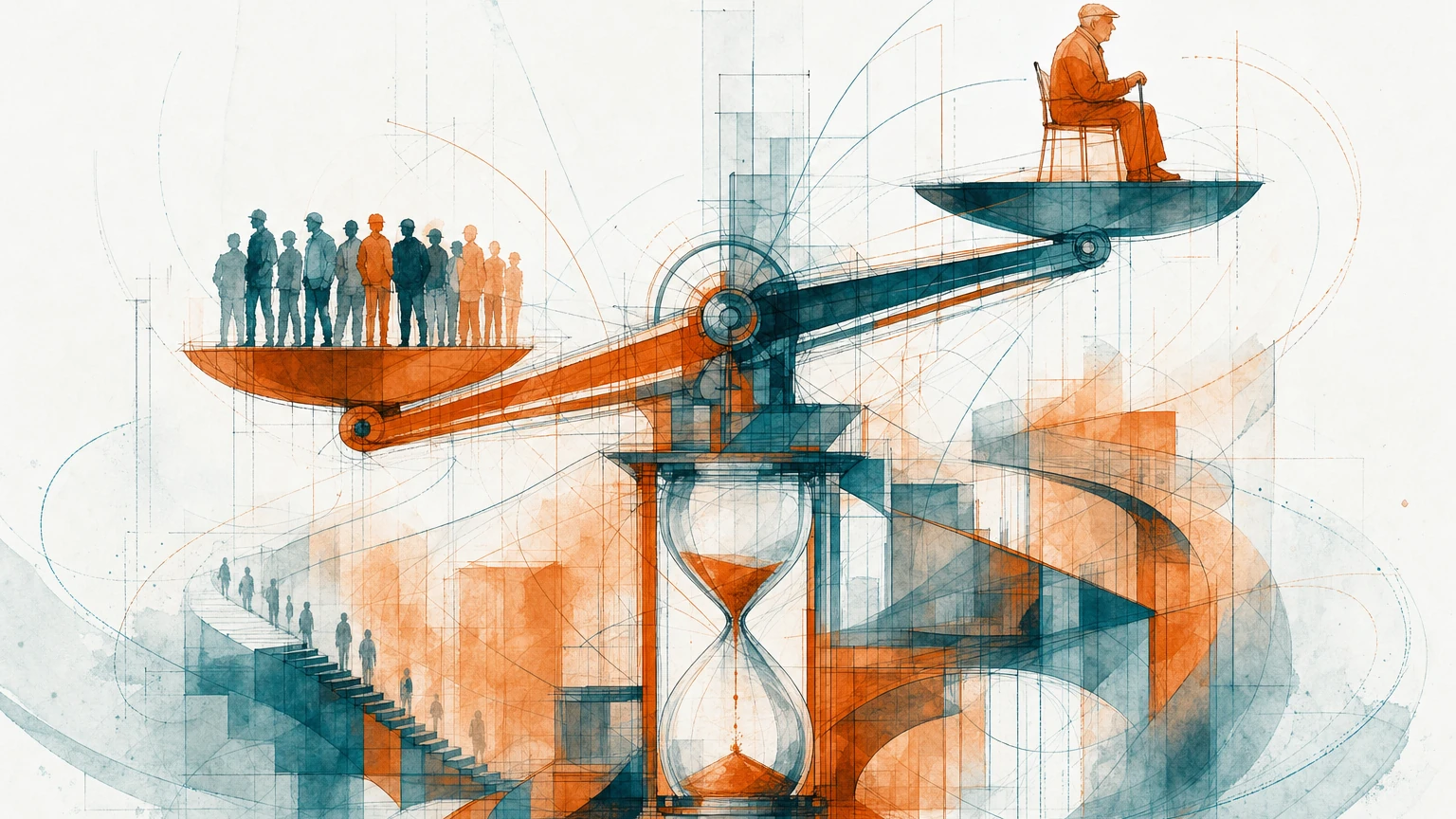
In 2025, for the second year running, the planet holds more autocracies than democracies. Ninety-two authoritarian regimes now face eighty-seven democracies. On paper, the shift looks tiny. Yet it marks a deep historical rupture. Since the fall of the Berlin Wall, democracy seemed the natural horizon of societies. That assumption has just cracked before our eyes.
More unsettling still: almost nobody openly calls for the end of democracy. In nearly every global survey, citizens describe it as the best possible system. How can a model so widely desired retreat so clearly? This paradox is the entry point to understanding modern political systems. Today's democratic decline no longer resembles that of the twentieth century. It no longer advances through coups or tanks in the streets. It progresses legally, election after election, reform after reform. Grasping this mechanism means learning to read political news differently.
The Basics: What Is a Political System?
A political system is the set of rules that organise power within a society. It answers three simple questions. Who decides? How does one gain power? How is that power limited? The answers trace a continuous line, not two fixed camps. At one end stands liberal democracy. At the other, closed autocracy. Between them lies a vast grey zone where the real story unfolds.
Researchers today distinguish four broad regime types. Liberal democracy combines free elections with strong checks and balances. Its courts are independent, its press plural, its rights protected. Electoral democracy keeps competitive votes, but its safeguards weaken. Electoral autocracy still holds elections, hollowed of meaning. An opposition exists, with no real chance of winning. Closed autocracy, finally, eliminates any genuine competition.
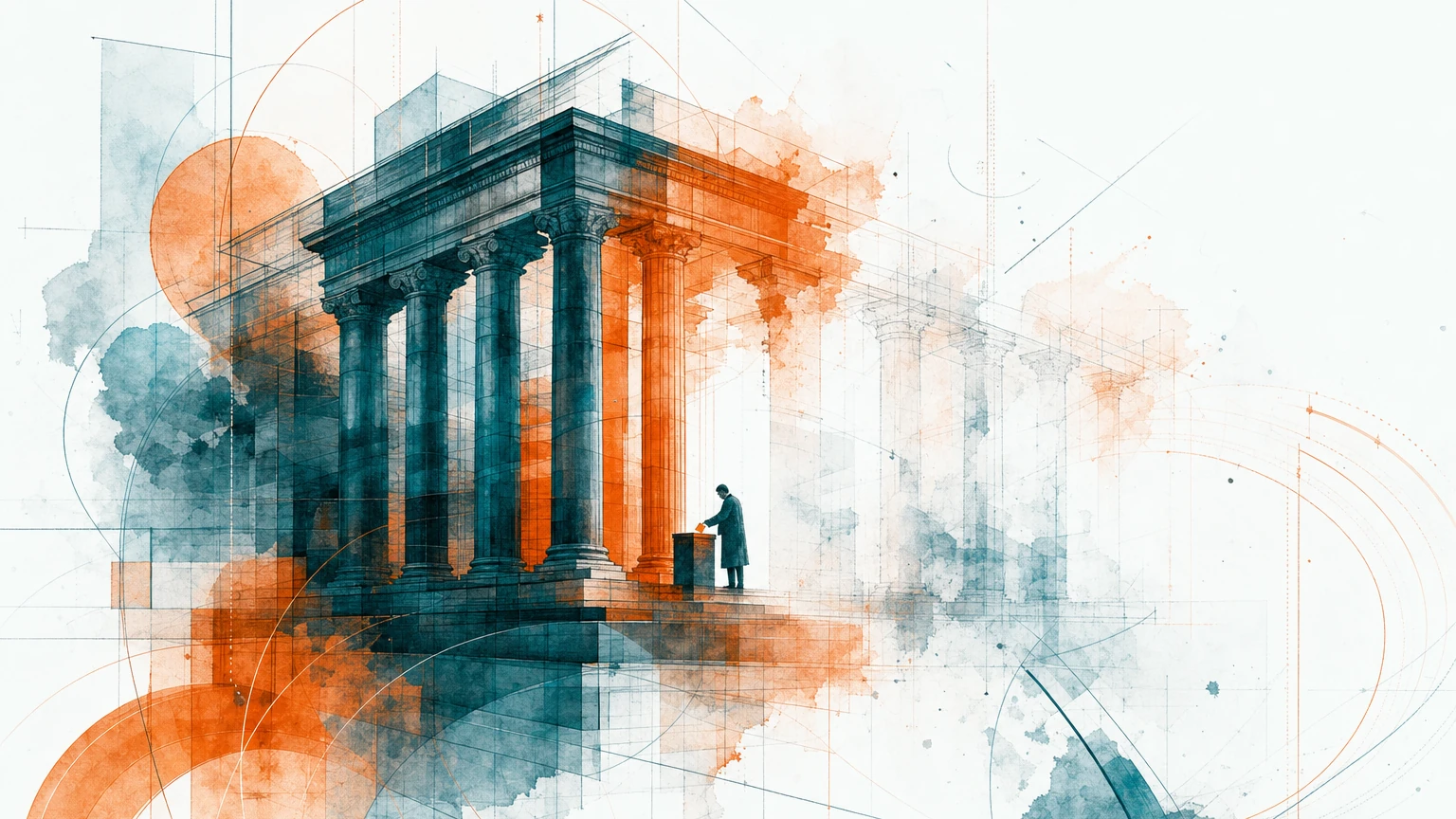
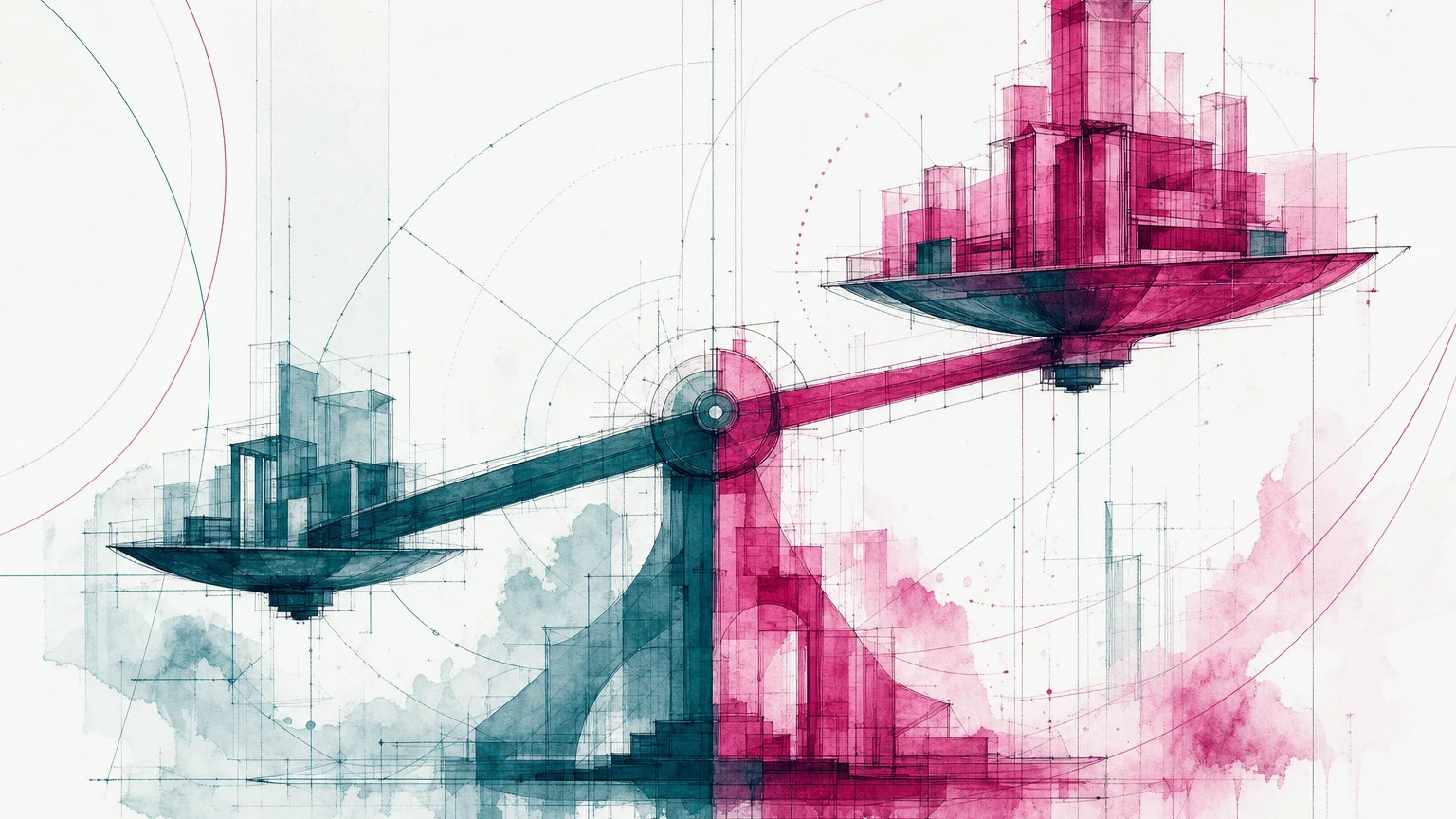
One phrase keeps returning: checks and balances. The term refers to the institutions that limit whoever governs. Courts, parliaments, media and independent authorities all belong to it. An election alone is not enough to make a democracy. Without checks, the winner can concentrate all power in one set of hands. This invisible architecture separates a true democratic regime from a mere electoral façade.
Separation of Powers and Forms of Democracy
The idea of checks and balances goes back to the philosopher Montesquieu. He proposed dividing power into three distinct branches. The legislative branch passes laws. The executive applies them. The judicial branch enforces them. Each branch watches and limits the other two. This separation remains the bedrock of every modern democracy. When one person controls all three, the regime stops being democratic. Concentration of power is the first warning sign.
Yet democracies do not all look alike. Some hand the executive to a directly elected president, as in the United States or Brazil. Others rest on a parliament that appoints a prime minister, as in Germany or Japan. Most are representative: citizens elect delegates who decide in their name. A few countries also practise direct democracy. Switzerland regularly puts major decisions to a popular referendum. These forms differ, but share the same demand for checks and balances.
Measuring democracy is far from obvious. Specialised institutes do not simply count elections. V-Dem mobilises more than three thousand experts worldwide. They assess hundreds of precise indicators. Judicial independence, press freedom and electoral fairness all enter the calculation. Freedom House and the Economist Intelligence Unit follow similar methods. Their results converge, which strengthens their credibility. No single number is perfect, but the broad trend stands out clearly.
Recent history sheds light on this landscape. Political scientist Samuel Huntington described three great waves of democratisation. The first slowly crosses the nineteenth century. The second follows the Second World War and decolonisation. The third begins in Lisbon, in April 1974. The Carnation Revolution topples Portugal's dictatorship almost without bloodshed. Between 1974 and 1990, more than thirty countries turn democratic. Spain, Brazil, South Korea and Poland join the movement. Each wave, however, was followed by a reverse flow. Some countries slid back to authoritarianism. Today we are living through a large-scale reverse wave.
These reversals are nothing new to our century. In the 1920s and 1930s, young European democracies collapsed. Italy and then Germany turned to authoritarian rule. In the 1960s and 1970s, Latin America saw a wave of military coups. Chile and Argentina were striking examples. History therefore shows that nothing is guaranteed. Democracy advances in waves, then recedes, then resumes. Understanding this rhythm helps temper both euphoria and panic.