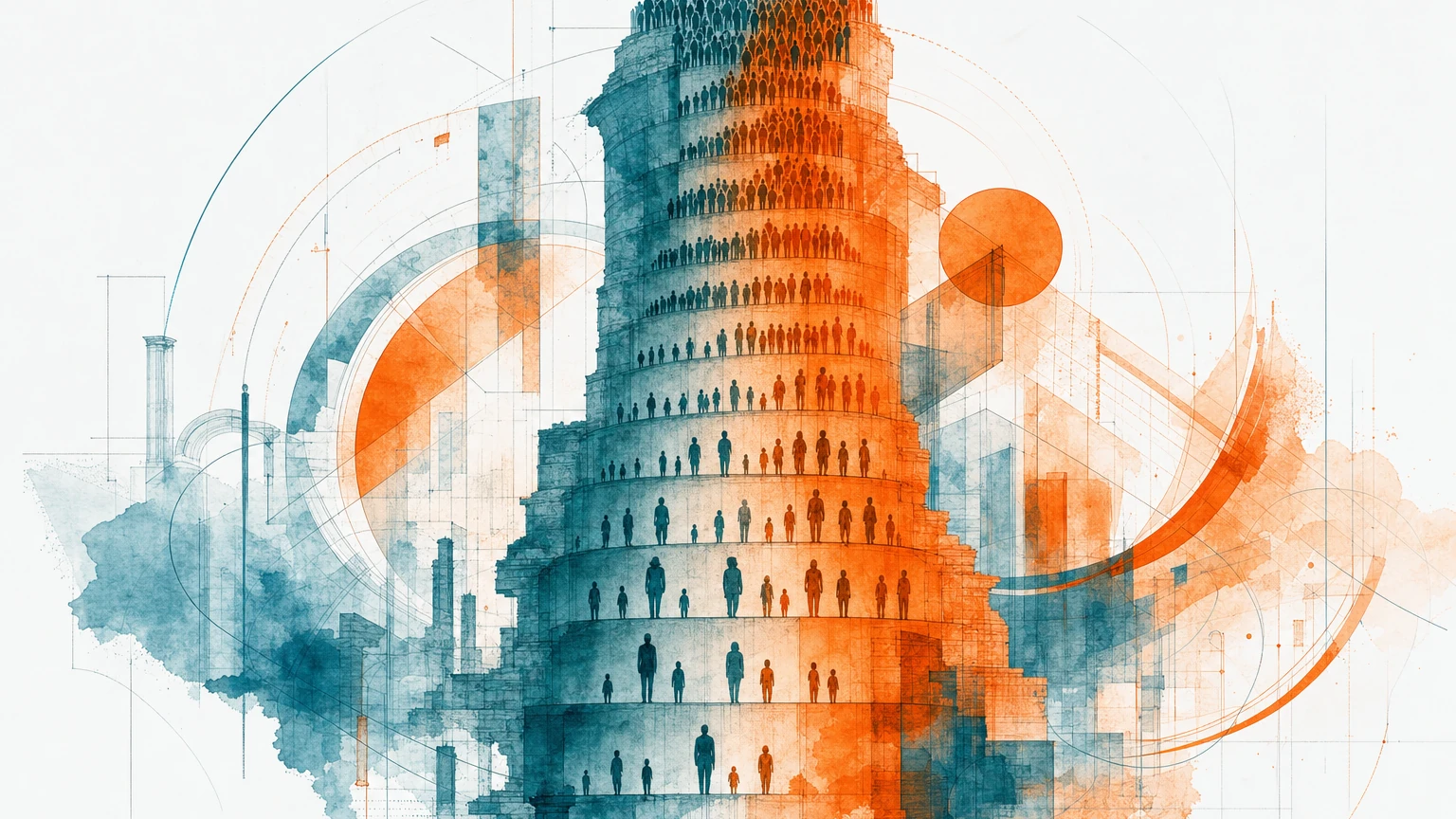
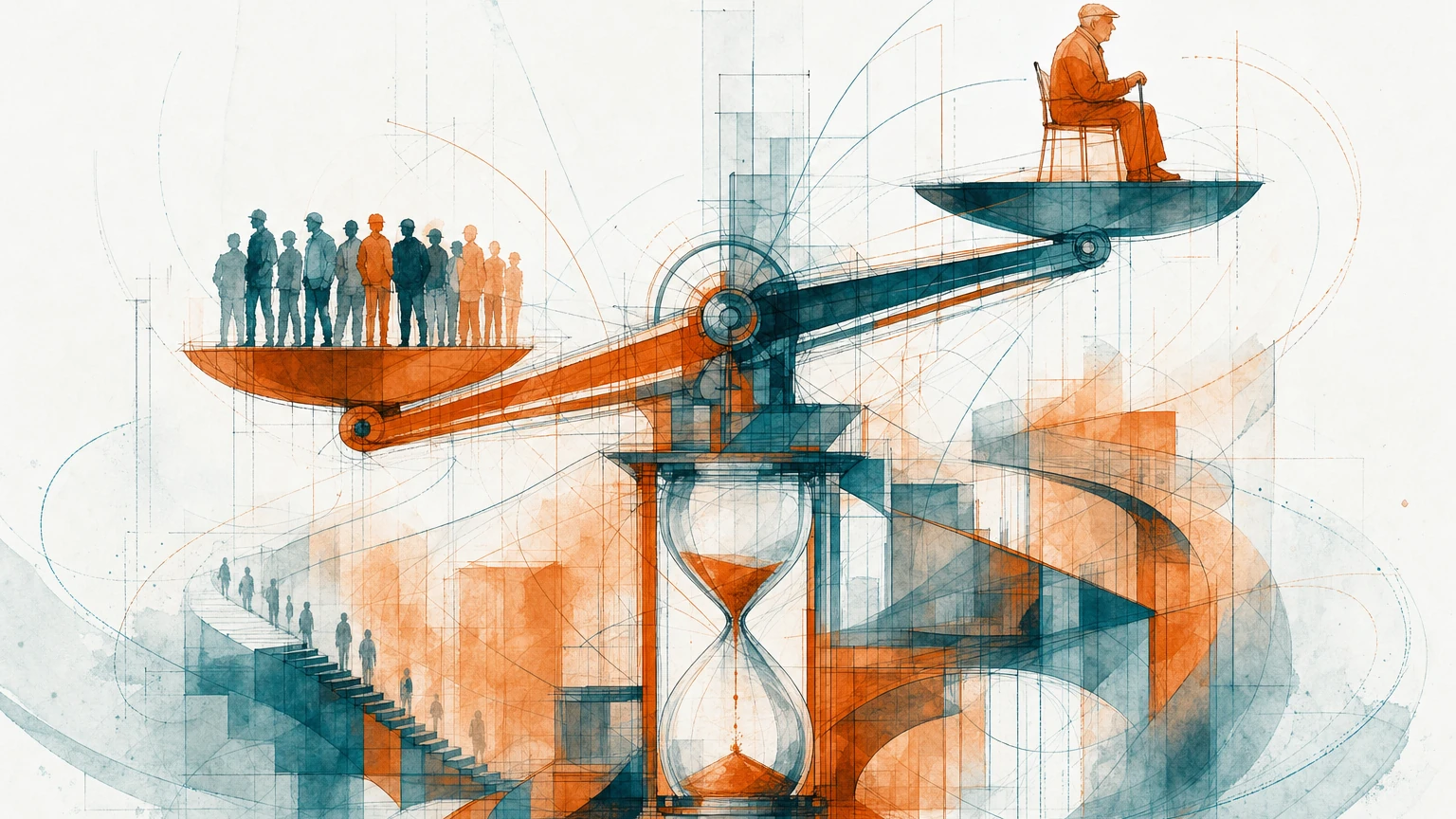
Global fertility has been halved over sixty years. At the same time, the share of people aged 65 and over has doubled. This dual shift is placing unprecedented pressure on pension systems, labor markets, and economic growth. The question is no longer whether this will happen: it already has.
The world has never been more crowded. And it has never aged this fast.
Introduction
In 1960, the average woman had five children over the course of her life. In 2025, she has 2.25. At first glance, this looks like progress: less poverty, better education, more freedom to choose.
But the number conceals a more complex reality.
Within twenty-five years, for the first time in history, there will be more people aged over 65 than children under 15 on the planet. This demographic reversal is not an impending catastrophe. It is a slow-moving mechanism that most economic analyses still underestimate.
Understanding the demographic transition means understanding why some economies stagnate, why pension debates never seem to go away, and why China, Germany, and Japan face structural challenges that no economic upturn will simply sweep aside.
We use audience-measurement (statistics) cookies to understand how the site is used. Cookies strictly necessary for the site to work are always on. Cookie policy
Cookie preferences
Choose which cookie categories you allow. Your choice is stored for six months and can be changed at any time.
NecessaryAlways on
Essential for the site to work: session, security, remembering your cookie choice. Always on.
Anonymous audience measurement (Google Analytics) to understand site usage and improve it.