Hormuz reopened, but the threat that closed it didn’t
For three months, a 33-kilometer strait was enough to disrupt 20% of the world’s oil supply. The US-Iran deal moves the Brent price, not the underlying logic.
THE FACT
Yesterday’s US-Iran deal put an end to three months of near-total closure of the Strait of Hormuz, a 33-kilometer chokepoint between Iran and Oman through which roughly 20% of the world’s oil and 20 to 25% of globally traded LNG normally flows. Brent crude fell 4% this morning.
WHY THIS MATTERS
Set Iran aside for a moment. What this episode makes clear is something structural: natural resources have never been just inputs for industry. They are instruments of power. States that control access to critical resources don’t just hold an economic advantage, they hold leverage over every nation that depends on them. And that leverage has historically been one of the most consistent drivers of conflict between states.
Gulf oil is only the most visible case. The same logic runs through South American lithium, DRC cobalt, Moroccan phosphate, and Nile water. What they share: extreme geographic concentration, no viable short-term substitute, and the capacity to turn economic dependency into political pressure.
The pattern is not new. What is new is the frequency with which it is playing out, and the number of resources now caught in that dynamic. Energy, critical minerals, water: each one is becoming a front in a competition that looks less like trade and more like strategic positioning.
Hormuz has reopened. The dynamic that shut it hasn’t gone anywhere.
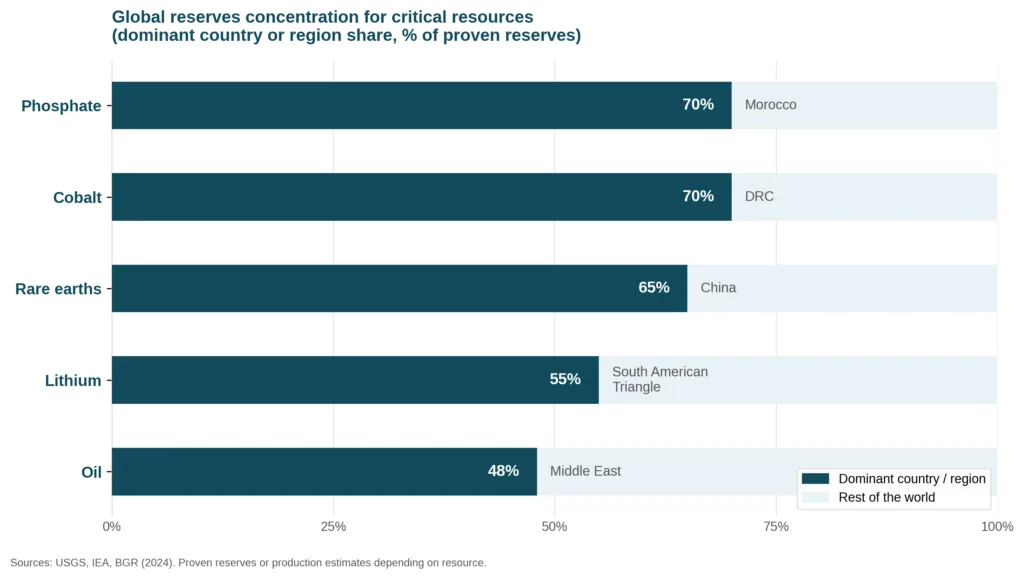
To understand why certain resources concentrate so much geopolitical power (and what this means for the decades ahead) read the Fundamental “Natural Resources.”
Read the Fundamental →