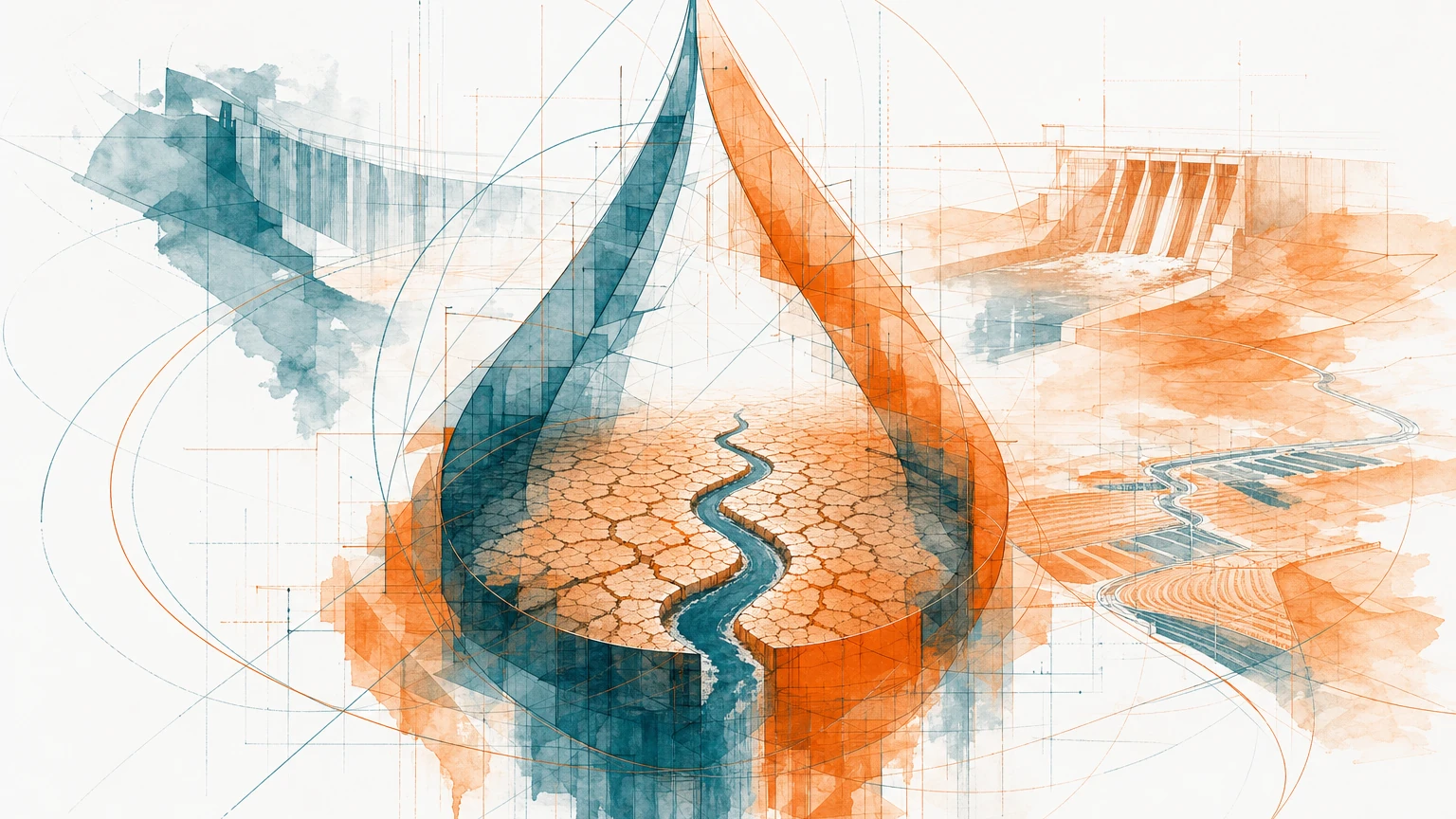
Our planet is blue, and yet nearly 4 billion people run short of water every year. How does a seemingly infinite resource turn scarce? From India's aquifers to the Nile dam, this Fundamental decodes the mechanics of water scarcity.
The Earth is drowning in water, and still it runs short
Seen from space, the planet is blue. Water covers 71 % of its surface. That image feeds a comforting illusion: water is everywhere, so it must be endless. The numbers say otherwise. Of all the water on Earth, less than 1 % is fresh, liquid and within human reach. The rest is salty, frozen, or buried too deep to use.
This contradiction defines one of the century's central strains. Nearly 4 billion people already face severe water shortages for at least one month a year. Yet the total amount of water on Earth has not changed in millions of years. The problem is not the global quantity: it is where the water sits, when it arrives, and how clean it is. Grasp that, and you understand why a seemingly infinite resource fuels disputes between nations, farming crises, and strategic investment decisions.
None of this is abstract. Water scarcity is paid in lost harvests, higher food bills, and diplomatic tension. It already shapes the map of migration and conflict. This Fundamental starts from zero to rebuild, figure by figure, the logic that turns a water-covered planet into a thirsty one.
The basics to know
A blue planet, a tiny resource
The geography of water fits into a single vivid image. Out of every 100 litres of water on Earth, about 97.5 are salty. The remaining 2.5 make up fresh water. But most of that fresh water is locked in glaciers and polar ice, or sits in deep underground reserves. The share actually available in lakes and rivers is a sliver of the total. That is the drop shared by farming, industry, and cities.
We use audience-measurement (statistics) cookies to understand how the site is used. Cookies strictly necessary for the site to work are always on. Cookie policy
Cookie preferences
Choose which cookie categories you allow. Your choice is stored for six months and can be changed at any time.
NecessaryAlways on
Essential for the site to work: session, security, remembering your cookie choice. Always on.
Anonymous audience measurement (Google Analytics) to understand site usage and improve it.