In 2010, a quarrel between China and Japan over a few uninhabited islands sent the price of one metal up 2,400 percent in under two years. That metal, dysprosium, is one you will never see. It hides inside the magnet that spins an electric vehicle motor. On that day, manufacturers worldwide grasped an uncomfortable truth. Their business depended on materials they could neither name nor replace.
You handle these materials every day without realising it. They sit in your phone, your earbuds, your laptop and soon your car. We call them rare earths and critical minerals. Their defining trait is not geological scarcity. It is that they are hard to extract cleanly, costly to refine, and concentrated in very few countries.
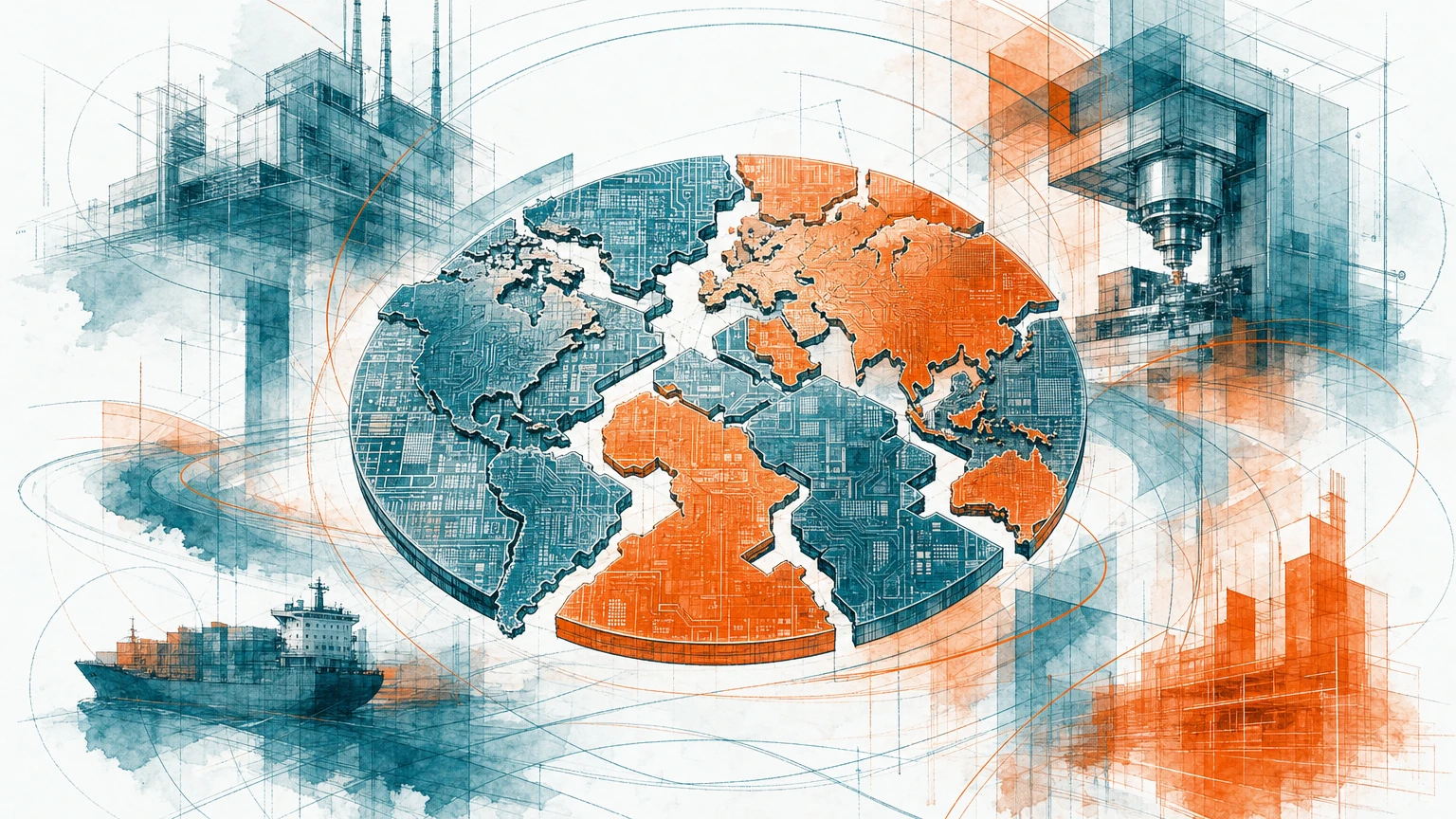
That concentration creates a novel vulnerability. A single country, China, handles roughly 70 percent of extraction and about 90 percent of global rare earth refining. Understanding this bottleneck means understanding why the energy transition, defence and electronics have all become front-line geopolitical questions.
The basics worth knowing
Rare earths and critical minerals: two distinct ideas
Rare earths are a family of seventeen chemical elements with unfamiliar names. They include neodymium, dysprosium, praseodymium and terbium. Despite the name, they are fairly common in the earth's crust. Cerium, one of them, is more abundant than copper. Their scarcity is economic, not geological, and this distinction matters enormously.
The difficulty lies in how they occur. These elements are never found pure, but blended together in very low concentrations. Separating them demands a long, energy-hungry and polluting chemical process. That is why few countries agree to host the industry. The hard part is not finding the ore, but turning it into usable metal.
Critical minerals form a broader category. A material is called critical when two conditions meet. Its economic importance is high, and its supply carries real risk. Lithium, cobalt, graphite, gallium and copper often appear on these lists. Each major power publishes its own list, revised according to its strategic industries and dependencies.
An internal distinction is worth learning. Analysts split rare earths into light and heavy categories. The light ones, such as neodymium, are relatively abundant and cheaper. The heavy ones, such as dysprosium and terbium, are far scarcer and more prized. It is precisely these heavy elements that run short, and whose production is most geographically concentrated.
Why these metals became indispensable
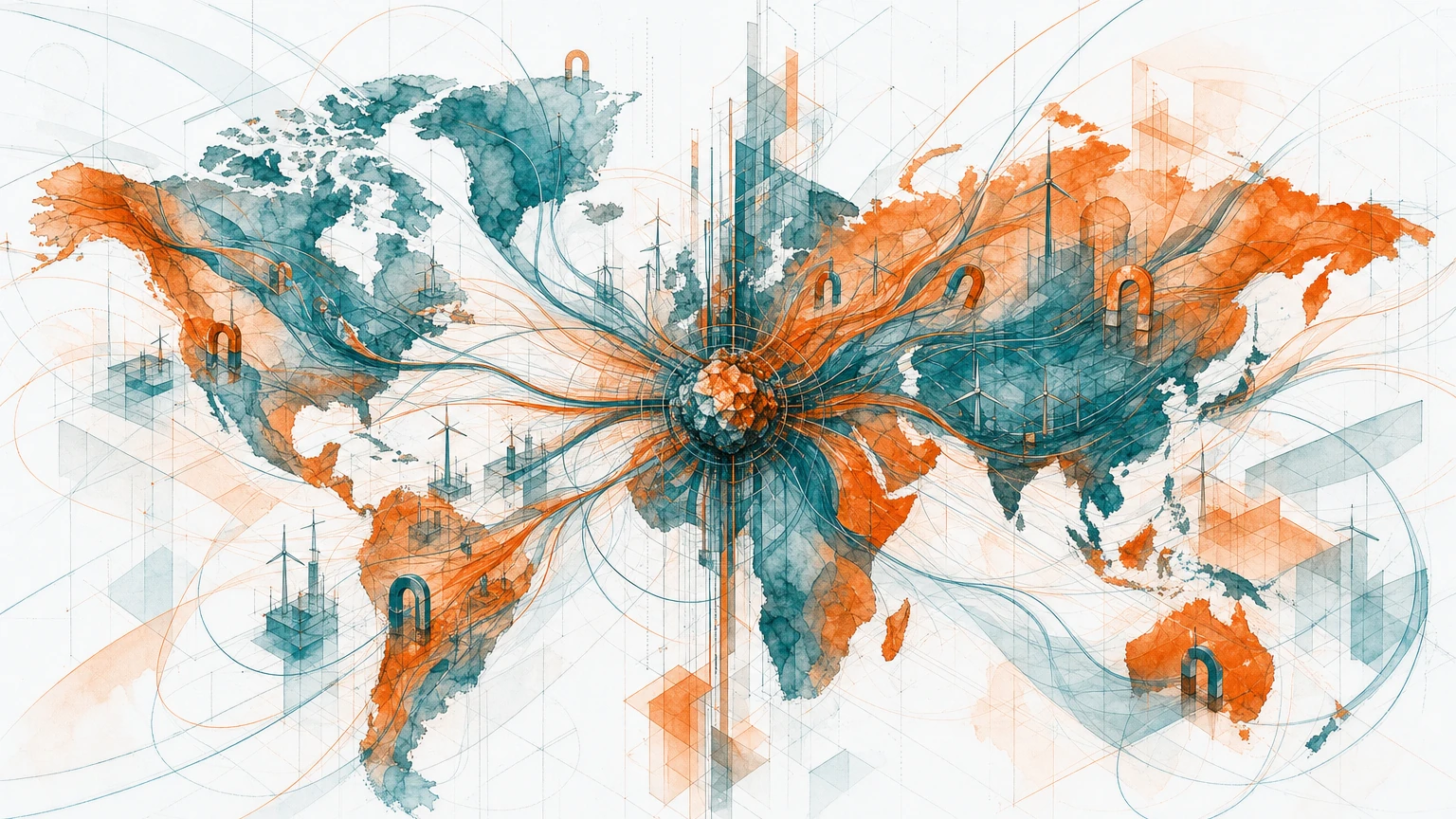
What unites these elements is one striking physical property. Combined with iron and boron, rare earths produce the most powerful permanent magnets ever made. These magnets, called neodymium-iron-boron, are tiny and hold their strength for decades. Without them, there is no compact electric motor, no high-performance wind turbine, no hard drive.
A single figure sharpens the stakes. A hybrid car motor contains around one kilogram of rare earths. An offshore wind turbine can require several hundred kilograms. As the world electrifies, demand for these magnets is exploding. Dysprosium plays a quiet but decisive role here. It lets the magnet withstand heat, an essential condition inside any working motor.
What this means in practice is simple. Two or three elements, with no known equivalent, underpin entire swathes of modern industry. A shortage in these elements cannot be easily engineered around. That is exactly where the real bargaining power of producer countries resides.
A defence stake that often goes unnoticed
These metals do more than power the civilian economy. A modern fighter jet contains several hundred kilograms of rare earths. A submarine demands even more. Radars, guidance systems and precision motors all depend on them directly. This dimension explains why the issue reaches beyond trade. It touches the national security of the major military powers.
That is why several countries build strategic stockpiles, as they do for oil. Japan, scarred by the 2010 crisis, built reserves and diversified its suppliers. This caution illustrates a lasting lesson. Dependence on an invisible input can turn, almost overnight, into a serious security gap.
An instructive historical backdrop
Today's dominance is far from natural. In the 1980s, the United States was the world's leading producer, thanks to the Mountain Pass mine in California. China then invested heavily, accepted high environmental costs, and undercut prices. Within twenty years, Western production had shut down. China rose from 31,000 tonnes in 1994 to 270,000 tonnes in 2024.
That shift reveals a deep industrial logic. Mining is one thing, refining is quite another. Refining rare earths demands complex chemical know-how and a high tolerance for pollution. China built that ecosystem while others walked away from it. Today, ore mined in Australia or North America often travels to China to be refined.