Gulf desalination: when drinking water becomes a target
Iran has again struck a desalination plant in Kuwait. Behind the military news lies a staggering dependence: several Gulf states manufacture nearly all of their drinking water from the sea, turning an infinite resource into a strategic vulnerability.
The fact
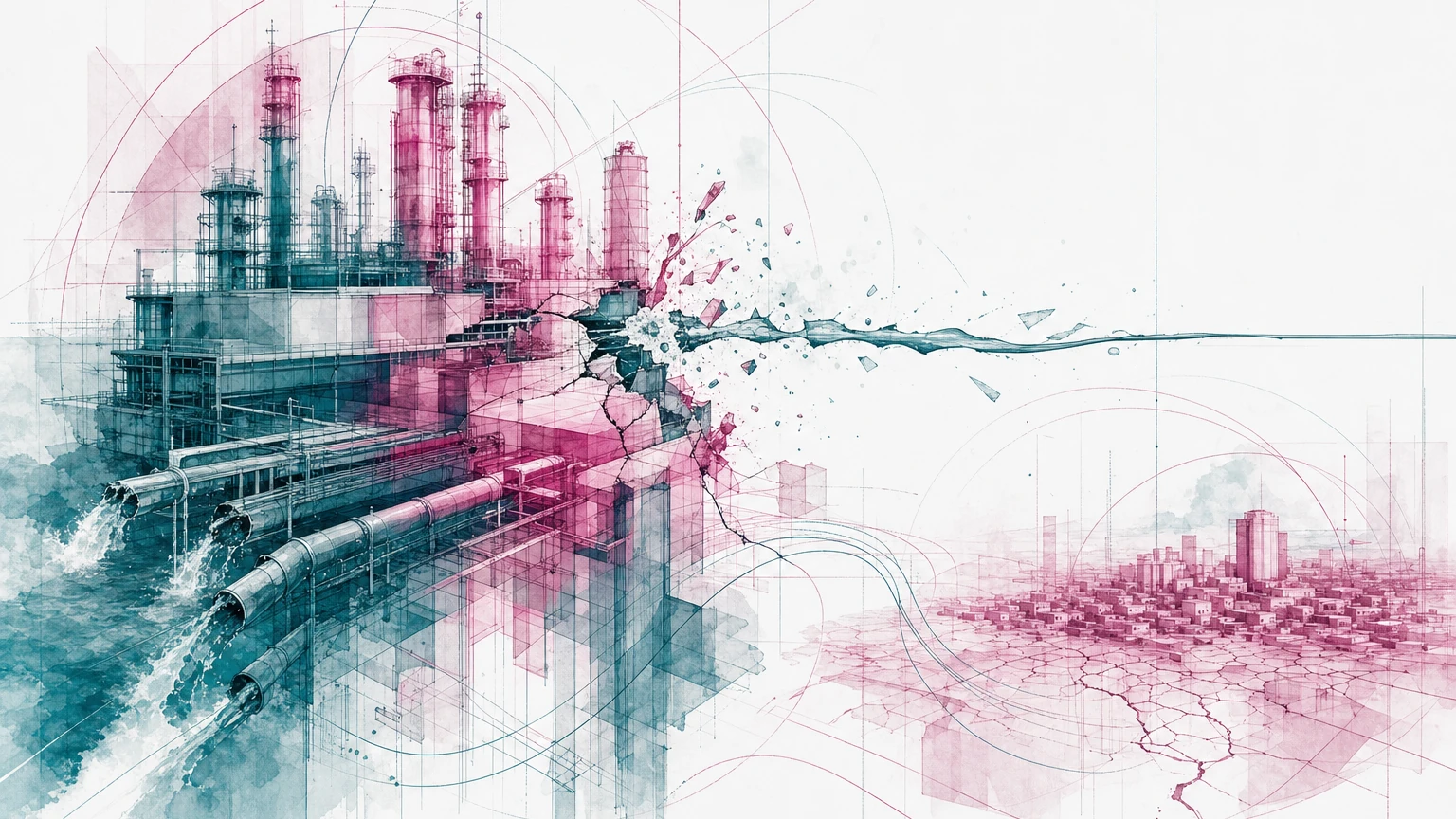
Kuwait announced on 18 July 2026 that another of its combined power-and-desalination plants had been hit by an Iranian strike, shutting down several generation units. Within days, Iran targeted water and energy facilities in Kuwait, Saudi Arabia and even its own coastal cities, turning the tap into a battlefield. The detailed account of these strikes exposes a vulnerability that the geography of the Gulf makes structural.
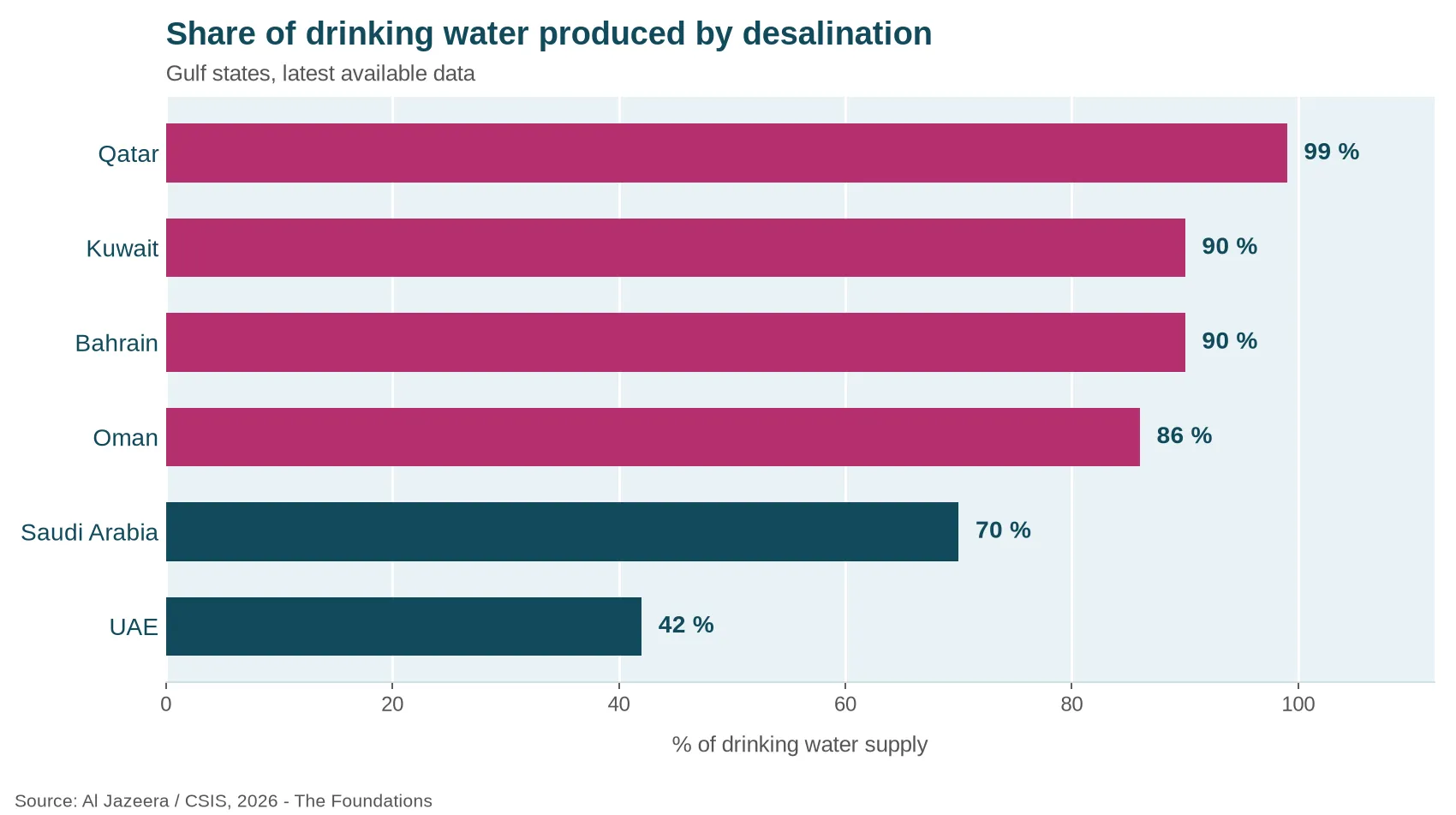
The mechanism comes down to one figure: Qatar draws 99% of its drinking water from desalination, Kuwait 90%, Saudi Arabia 70%. In a region where it almost never rains, fresh water is not pumped from the ground, it is manufactured by stripping salt out of seawater, a process that devours energy. That is the weak point: these plants are physically coupled to power stations. Hitting electricity production cuts the water in the same blow. A resource that the sea seems to make limitless thus becomes the Achilles heel of entire nations, because an abundant raw material never guarantees access. Scarcity does not come from quantity, but from dependence on a single, costly and concentrated piece of infrastructure that a handful of missiles can bring to a halt.
To understand why a seemingly infinite resource becomes a lever of power, read the Fundamental: “Natural resources: control, scarcity and geopolitics.”
You'll learn why less than 1% of the planet's water is actually usable, how the scarcity of a resource turns into a geopolitical weapon, and why control over water, sand or rare earths already shapes the conflicts of this century.
Read the Fundamental →