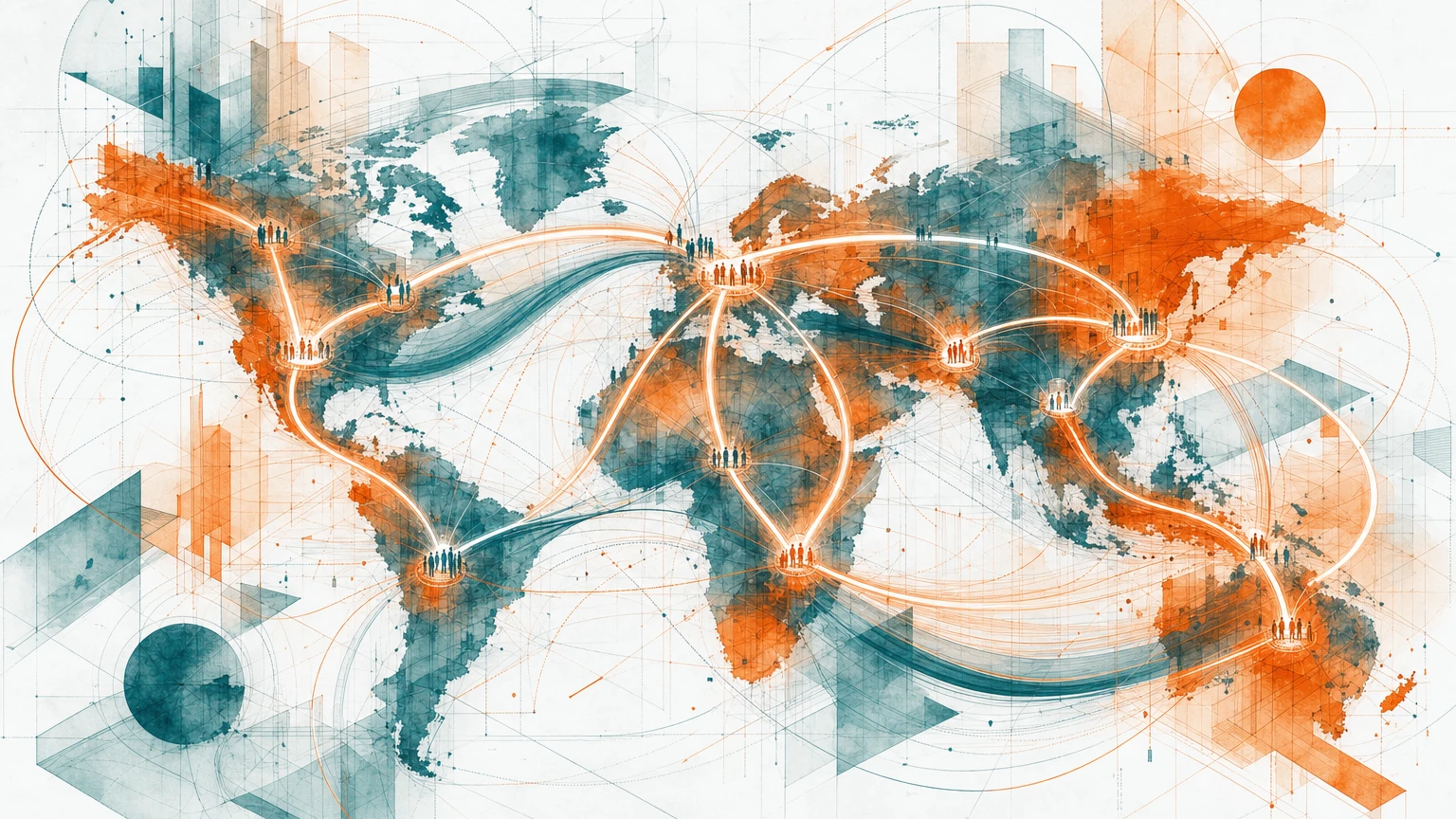
International institutions: who really sets the rules
The IMF, the World Bank, the WTO, the UN Security Council, these institutions shape global decisions that affect billions of people, yet most of us couldn’t explain what distinguishes one from another. How they were built, what power they actually hold, and where their limits lie.
The UN was built to stop wars. A single veto is enough to silence it.
UN, IMF, WTO: Understanding the rules of the global game
Introduction
In 2022, Russia invaded Ukraine. The UN Security Council convened in emergency session. A resolution condemning the invasion was put to a vote. And nothing happened, Russia vetoed it. No binding consequences. The organisation built to maintain world peace stood and watched, powerless.
The same pattern played out in 2023 over Gaza, where the United States repeatedly blocked any resolution deemed unfavourable to Israel. In 2018, Washington imposed sweeping tariffs on global steel, openly sidestepping the WTO rules it had helped write. And in 2010, Greece discovered that IMF assistance comes with a price: deep social cuts as a non-negotiable condition of rescue.
These institutions appear omnipresent and, at the very same time, paralysed when it matters most. How do we explain that contradiction?
The answer lies in their founding architecture. The UN, the IMF, and the WTO were designed between 1944 and 1947 to prevent a third world war and a second Great Depression. By those measures, they largely succeeded. But the rules they established (and the power they distributed) reflect the world of yesterday, not today’s.
This Foundation gives you the tools to understand how these institutions actually work: who decides, how, and why the great powers can sometimes break the rules without consequence.
We use audience-measurement (statistics) cookies to understand how the site is used. Cookies strictly necessary for the site to work are always on. Cookie policy
Cookie preferences
Choose which cookie categories you allow. Your choice is stored for six months and can be changed at any time.
NecessaryAlways on
Essential for the site to work: session, security, remembering your cookie choice. Always on.
Anonymous audience measurement (Google Analytics) to understand site usage and improve it.